

I had to think long and hard of how to approach this blog. In the end I approached it in the view of, it’s what I would have liked to have been told back then.
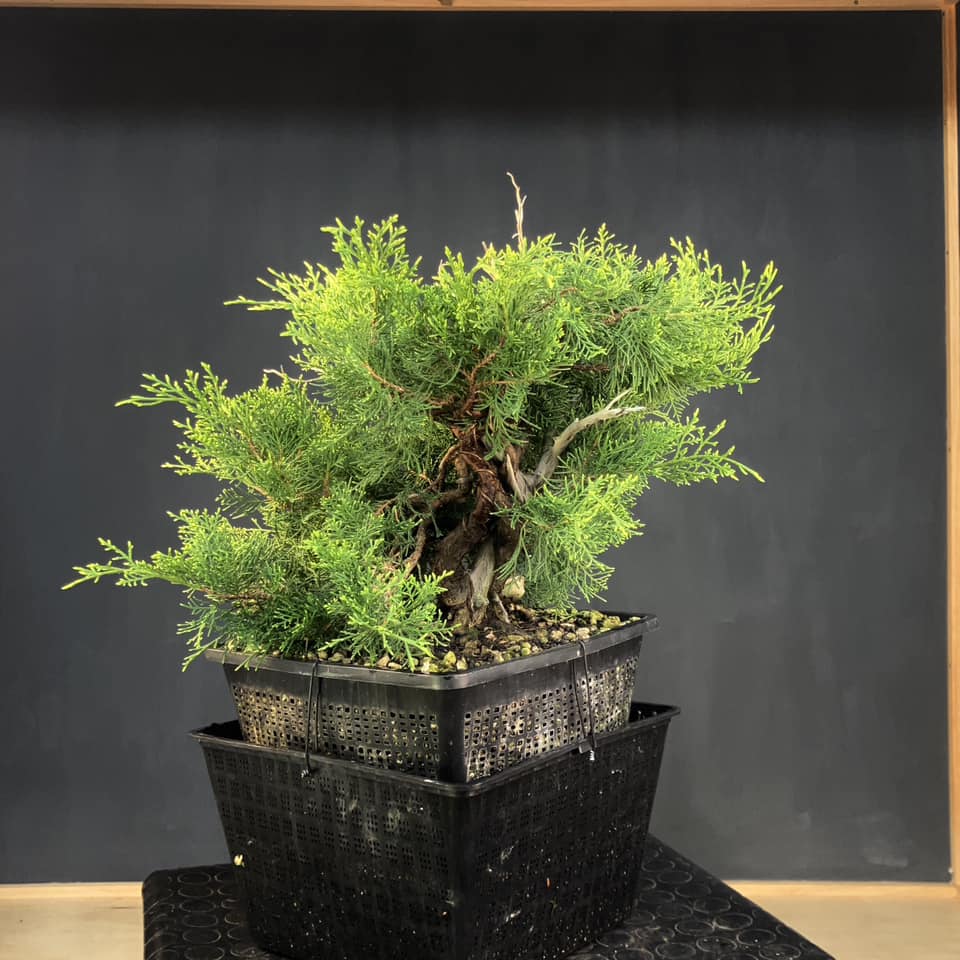
So let’s jump right in, below is a nursery stock juniper pictured 2 years apart (2024 and 2022).
Prelude, this tree was one of the first junipers I acquired when starting out in 2020. Super excited I jumped right in and attempted to style it as we all do.
What followed was a steep and exciting learning curve of many many hours of practice and study of how to actually wire and design a tree. (Best time ever of everything being new and unknown)
Throwing out the old steel wire and a recycled steel coat hanger along the way, all of which I had been using for the first year, to the getting into the good aluminium stuff (‘I accredit this 1st year of hard wiring to the very high standard I produce today) I continued to advance this young tree into what you see in the 2022 photograph.
Now I’ll emphasise this, I strongly recommend as a hobbyist who needs to practice their design ability, to go ahead and wire out that little tree 100%. Then come back and review maybe a year later and make tweaks, you have to feel confident to (fully) wire a tree and initialize a design from start to finish. Do this over and over again with many trees until it becomes second nature.
Now back to the click bait title! Once you have that little tree as in the 2022 photo, your knowledge should have also advanced to a stage where you have furthered not only your skills but also your view of what makes a quality tree over time and the development needed. This is a key point in your personal development in the hobby.
What was wrong with 2022? As a simple little tree, not much. It was wired, styled even taken to a workshop, I was very happy with it then. However that’s it, it would never advance to anything else than a nice simple tree on that current trajectory. The trunk was boring, too small, poor proportions and had no interest. Not enough to keep the eye entertained for longer than a split second. Harsh critique, but true for the future.
So what needed to be done?
The tree came out of its bonsai pot. I heavily rewired the primary trunks and branches bringing them tight with good movement then placed into a pond basket. Then into another pond basket.
What has happened in the last 2 years?
The trunk has doubled in size, the interest in the movement of the trunk and branches has improved dramatically and it is firmly on a path of becoming a great little tree.
What’s the plan for this tree’s future?
This tree will continue to go through a pattern of adding and subtracting until I feel there is enough interest. It will then be grafted with a better foliage type and once that has taken, it will be time for it to slow down and move to a bonsai pot. Simple as that really.
I’ll conclude by emphasising again the importance of learning and practicing and not being afraid to make the big changes to your trees. Don’t see it as a failure or bad to make the transition back to development. See it as progression of your skills and ability to be able to value and visualise a quality tree.
Trees in development are cool too!
Side takeaway…
“Juniper development adding and subtracting,” subtracting being the creation of deadwood removal of living tissue. When I see a small juniper I weigh up how much do I need to add when valuing it. Or conversely a larger juniper with no interest or deadwood how much do I need to remove to add value.
 Two Islands Bonsai
Leave a comment