Air-layering Podocarpus Tōtara and what we’ve reaffirmed.
Having spent the last couple of days working through the Podocarpus Tōtara air-layers performed in 2023, I thought it would be of interest to look back on the process undertaken so far and what’s planned moving forward. What follows is a recount of air-layer Al-01/17.
Back in August of 2023 I performed several air-layers on what was then approximately 3.5m tall trees. I initially acquired these trees for their great bases and age but quickly realised the potential in the upper 1/3 of the tree. These trees had been previously topped around the 2m high mark and as a result most had multiple branches emerging at a single point, perfect for a wider, interesting base for a new tree.
There was no precedent that I was aware of if these trees would root via the air-layering process and or how long it would take. The only knowledge I had was from reading a research article online where it was noted that after floods, Podocarpus Tōtara were observed to root (ground layer) in the silt that had formed.
As with most things, everything is in the preparation. Good clean cuts, lots of sphagnum moss, good care to not let the moss dry out or stay too wet and fast forward 7 months the first tree was separated.
I will note that the second batch of air-layers is well on the way which will further inform us of what is possible with this amazing species!
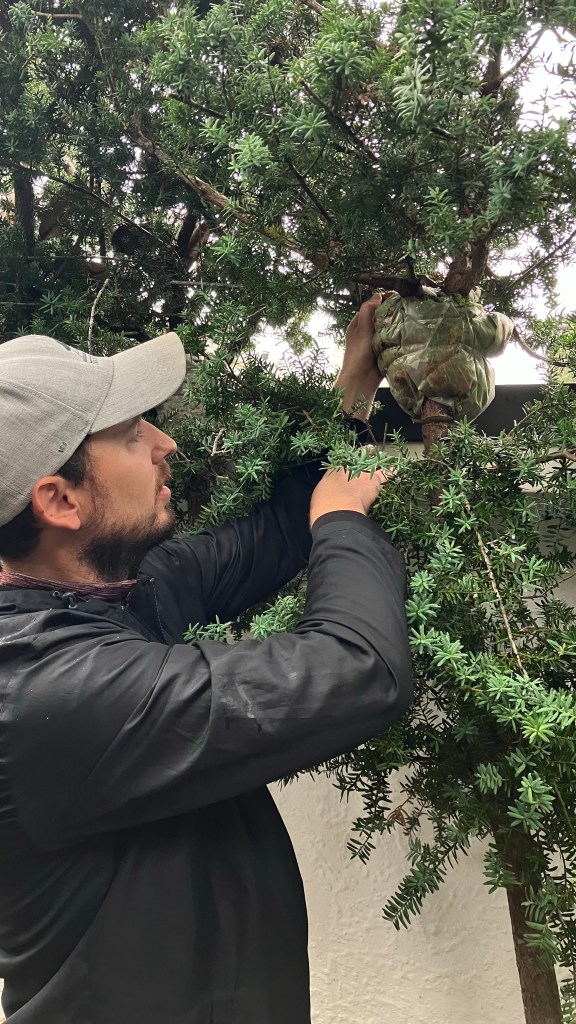
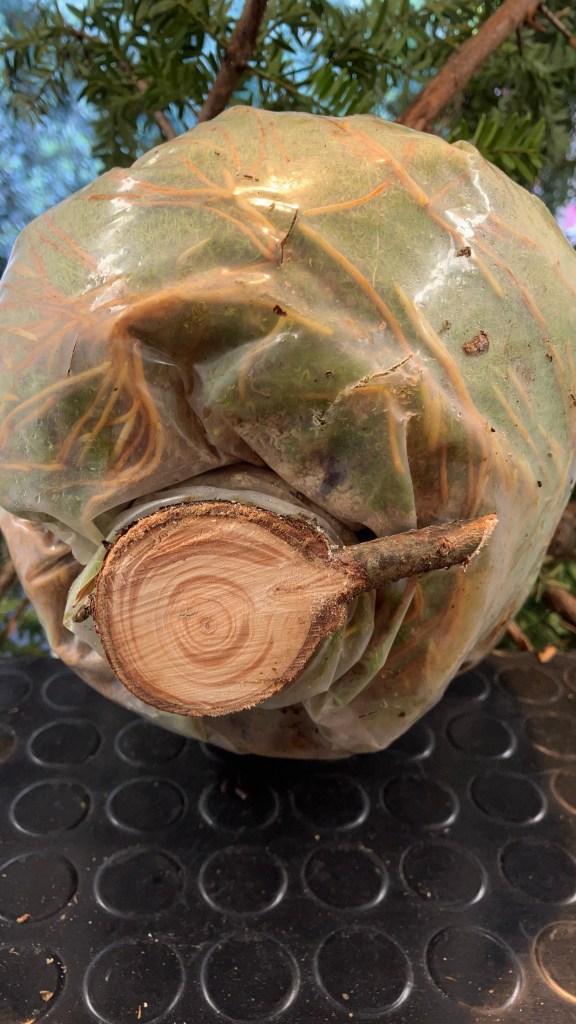
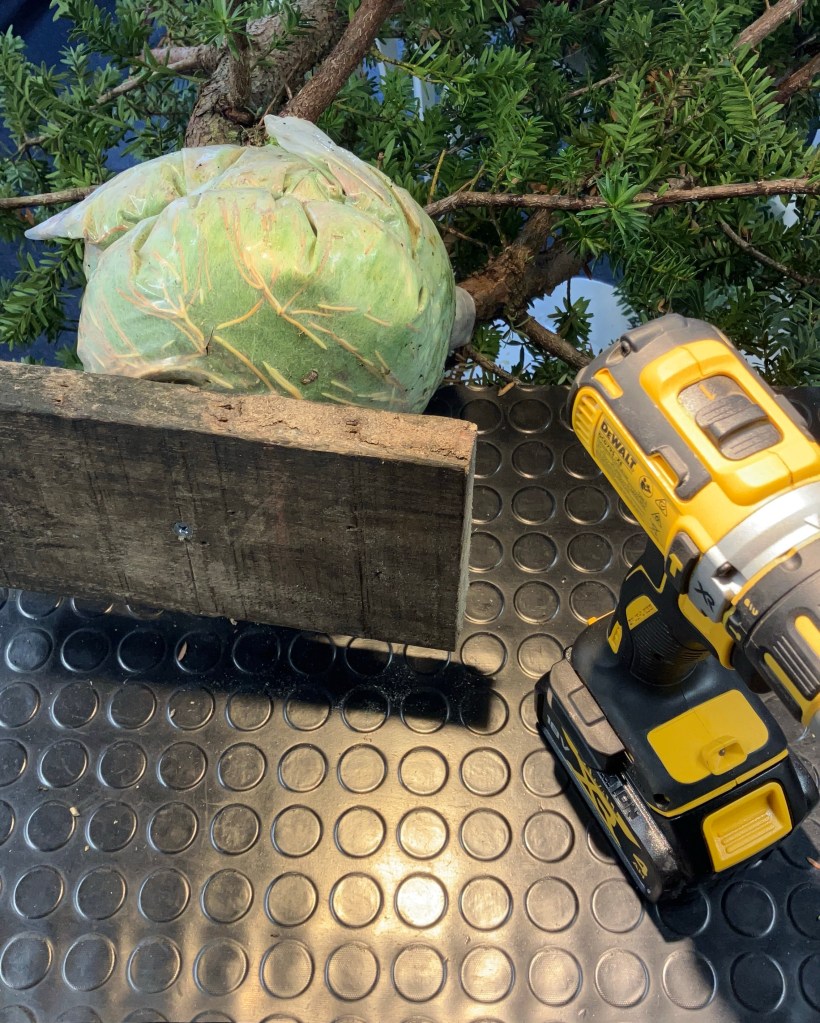
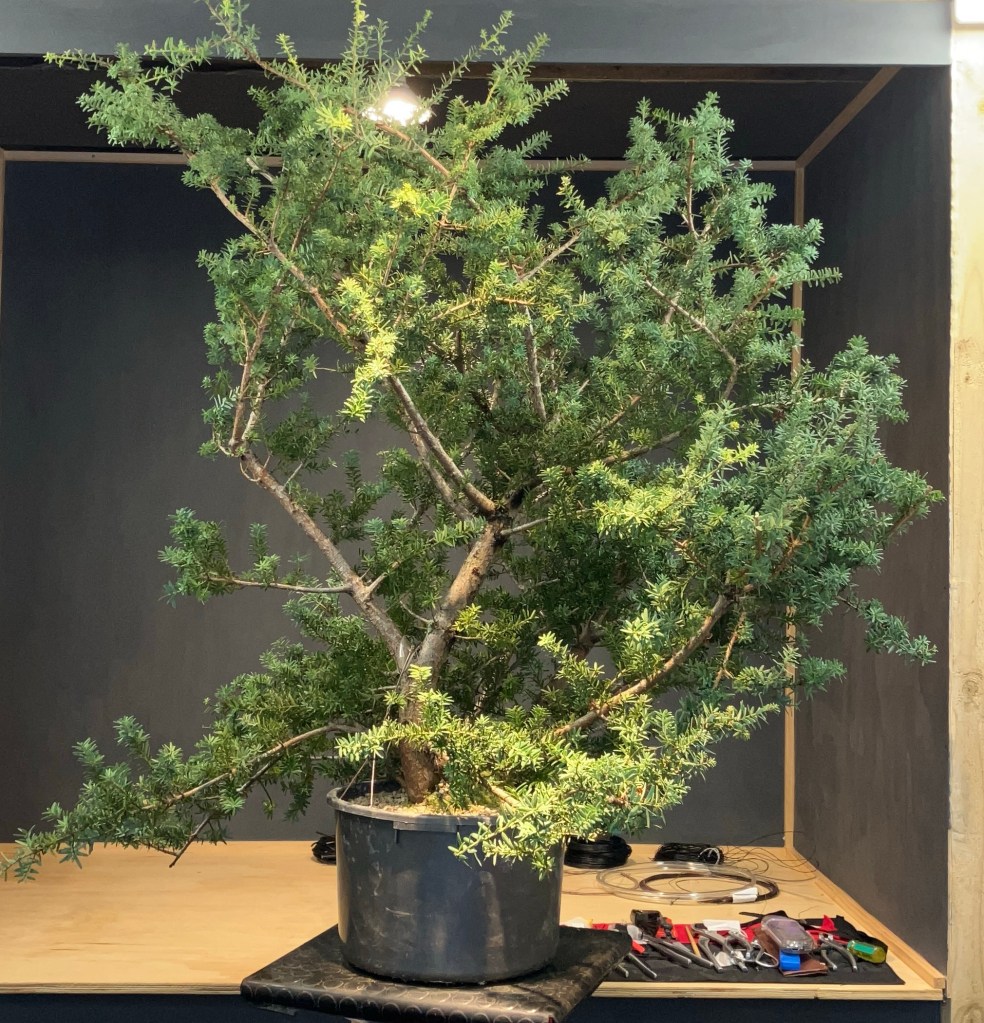
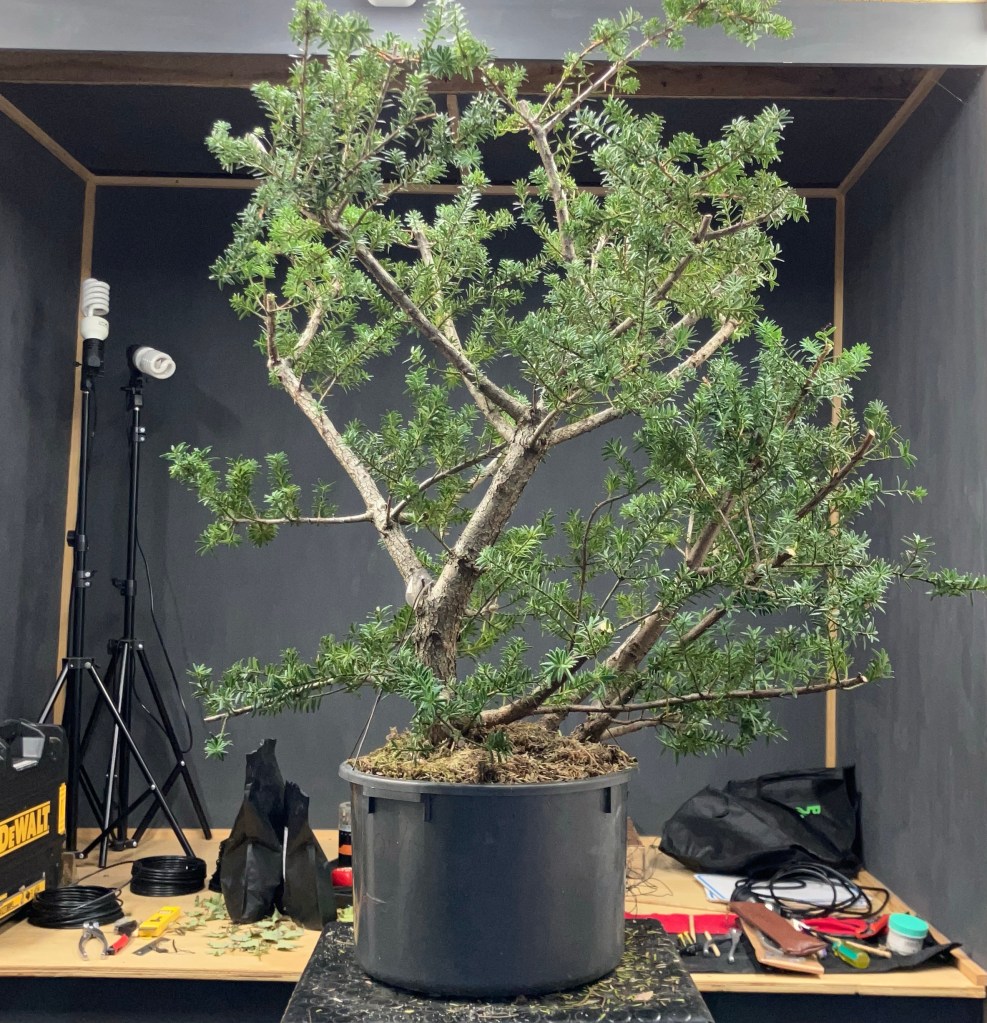
(Mar-24) Al-01/17 – Documenting the removal of this air-layer seemed appropriate. Thanks to my wife for coming out in the rain and taking the picture!The chosen container size, just the right depth and width to accommodate the incoming root ball. A plank of wood to be used to anchor the root ball. Container size is extremely important, so please do not discount this. Further drainage holes were made into the container. (Aug-24) A good amount of roots, but at this stage very easily broken. Decision made to not try and remove the sphagnum moss. A good amount of age already accumulated.The plank of wood screwed into the ‘stalk’ at the base of the tree to anchor and stabilise. This will be cut back to the base of the air-layer at next repotting. The root ball placed in. Galvanised steel wires were used to secure the wood plank to the base of the container. A tricky task to squeeze your hand in there, but well worth it.The potted air-layer! Medium grade pumice was used as the soil medium. I was very aware of the core staying too wet with the sphagnum moss. Subsequently I’ve had to be very accurate with the watering, balancing water and oxygen. Further galvanised steel was used to stabilise the tree to the container. If the tree is moving it’s dieing! That’s a big air-layer!(Dec-24) Fast forward 9 months, late December. This without a doubt proves the strength of these trees is in their vascular system. That was a lot of foliage to leave on and done on purpose. Yes sure, it shed needles along the way but it also put on more growth and didn’t drop any branches. The foliage has done the work and created further roots.Preparation, initial cut backs made, options for future styling left open. The cut back was made in late December (early summer in New Zealand) as these trees are now ready to push another flush of growth and by utilising this growth flush to my advantage it will allow me to style these trees come autumn as the foliage put on will be more usable in the design process.
What follows is a video taken, published on Instagram of the removal of Al-01/17.




 Two Islands Bonsai
Leave a comment