
Winter silhouette; for some a dreary time of year and for others like myself the excitement of seeing the progress made from the prior growing season.
There may be no other comparison when it comes to measuring one’s progress over the years than a deciduous tree in winter silhouette. With nothing to hide behind, naked in all of its beauty or ugliness.
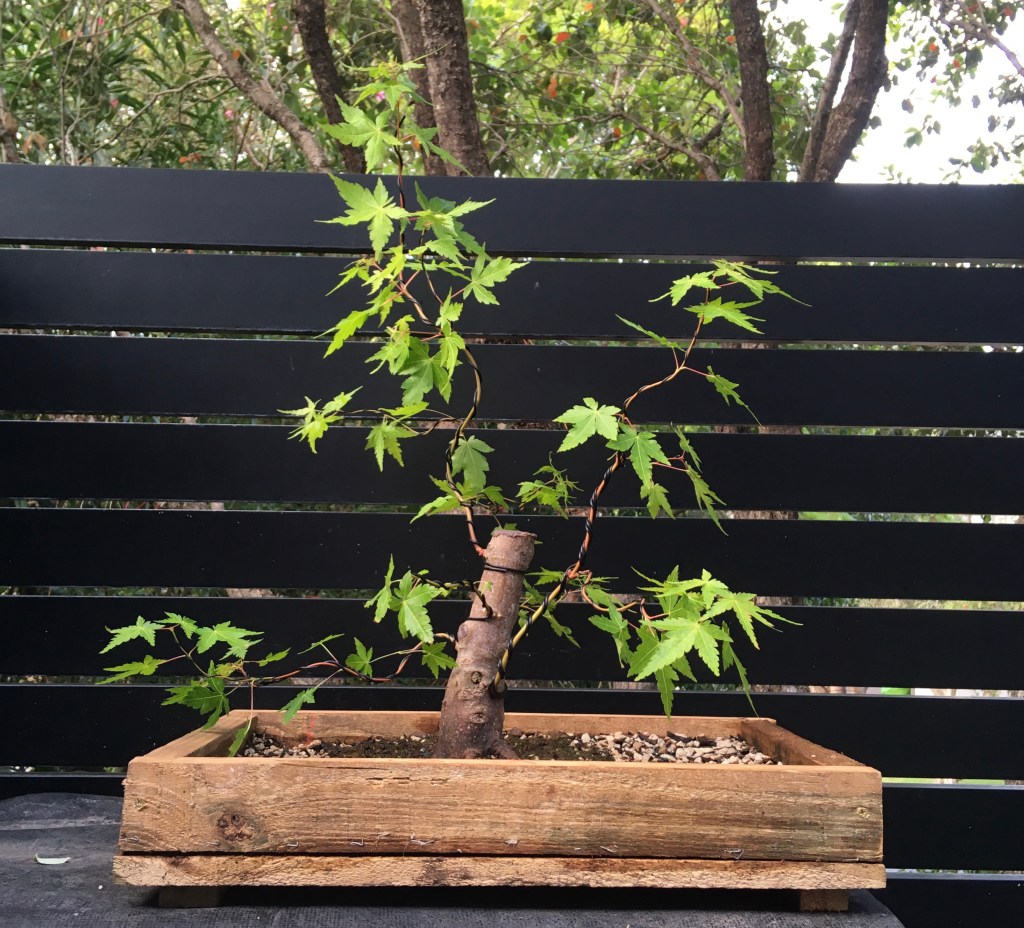

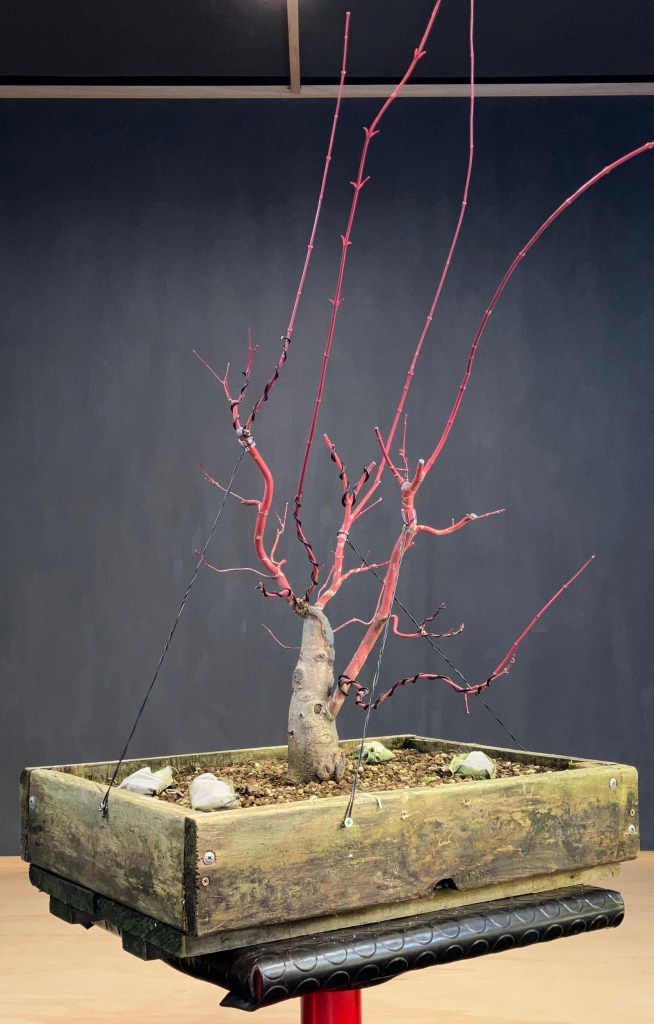

So what decisions were made in this year’s pruning session? My first priority was healing over that original stump cut, aligned with that was increasing the girth of the ‘main trunk’, fortunately, both could be achieved by way of a sacrifice branch. The other sacrifice branch originates from the top of the original stump cut, and will also be used as a tool for healing that wound. It may or may not be used in the final design. Together those two sacrificial branches will accomplish those goals.

So why did I prune back the sacrifices of the other ‘trunks’. There were a few of reasons, the main being I wanted the vast majority of the trees energy to go into the main trunk, that’s priority one. Some others were, there comes a point where you need to look to add taper to a branch/ trunk by cutting back and maybe relevant to the elegance of a Japanese maple, one has to consider the size of the wounds created by leaving too large of a sacrifice branch instead of transitioning between sacrifices. Slow and steady wins the race here.
With many more years of development ahead and with endless decisions to be made, we look forward to this time of year where we can reflect and also plan for the next year.
I’ll end on a tip, if you can organise it in such a way that your sacrificial branch is at the back of the tree that way you don’t create a wound in the front. Not always an easy task, and not too much of an issue if you not making too large of a sacrifice branch.
 Two Islands Bonsai
Leave a comment