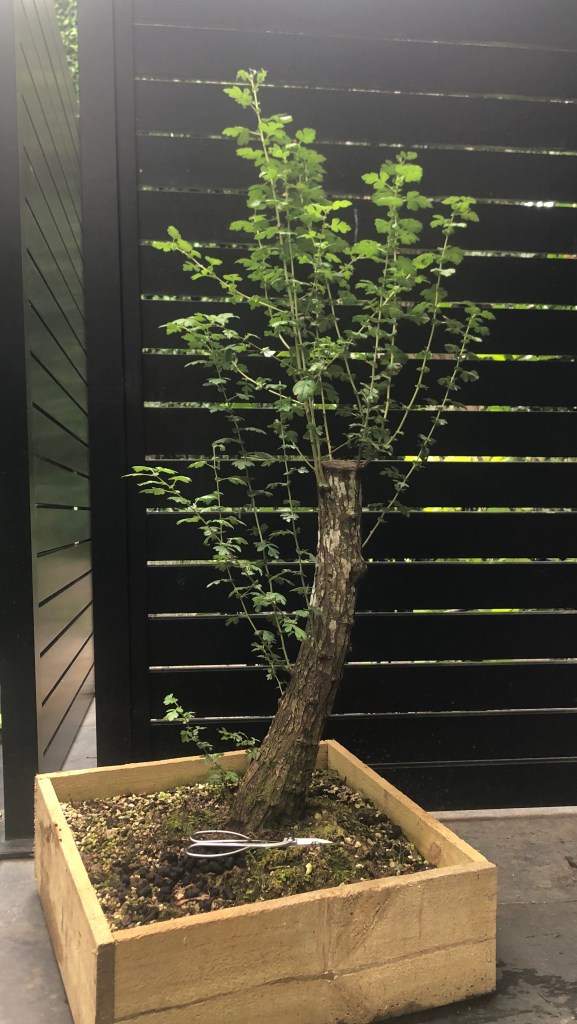
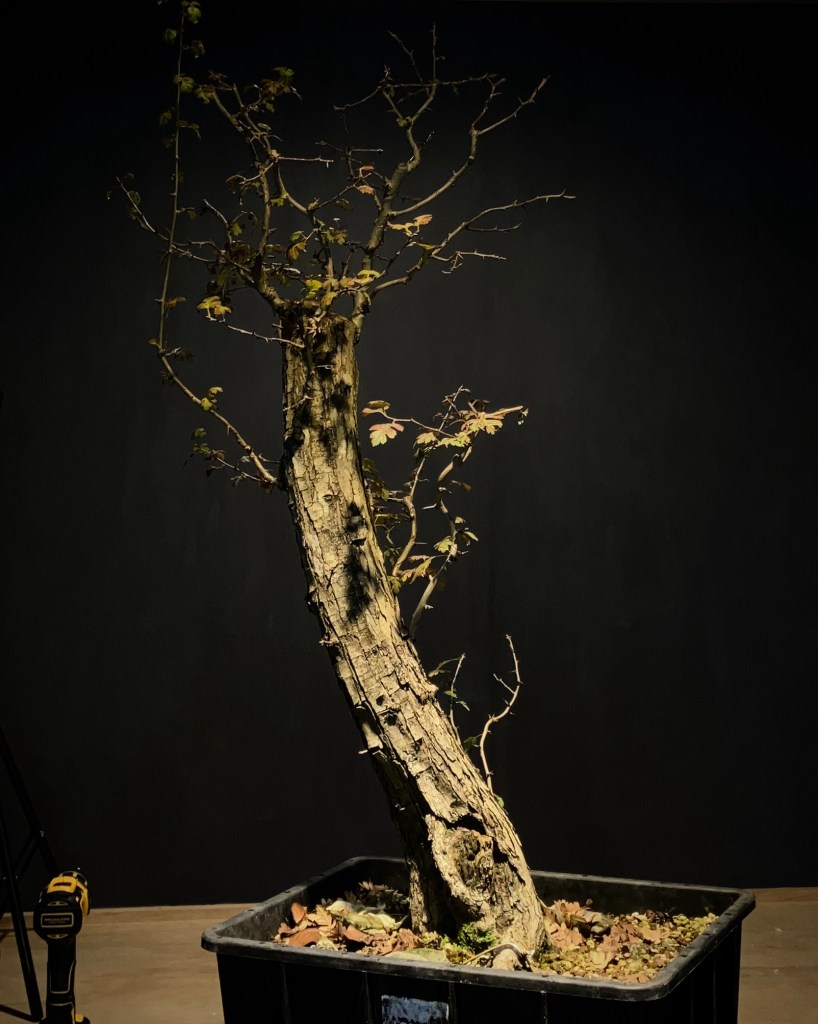
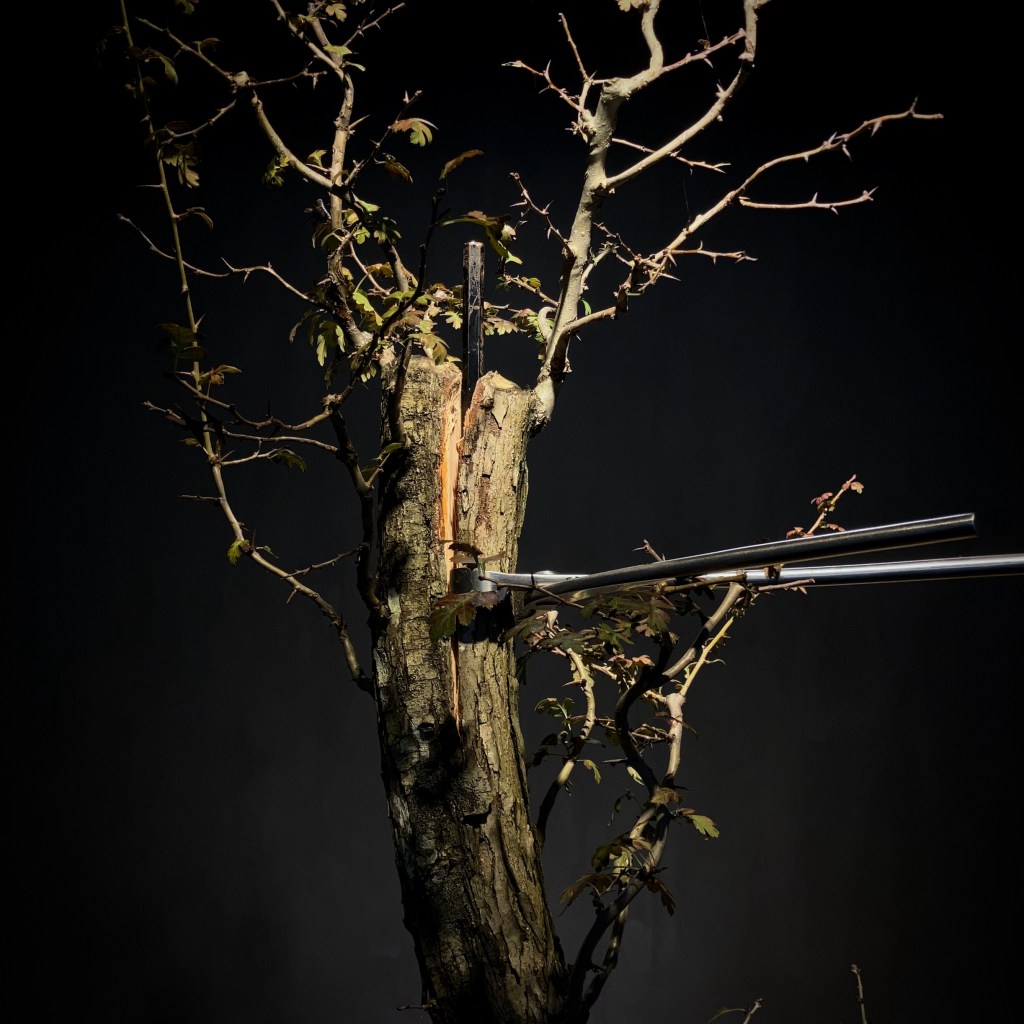
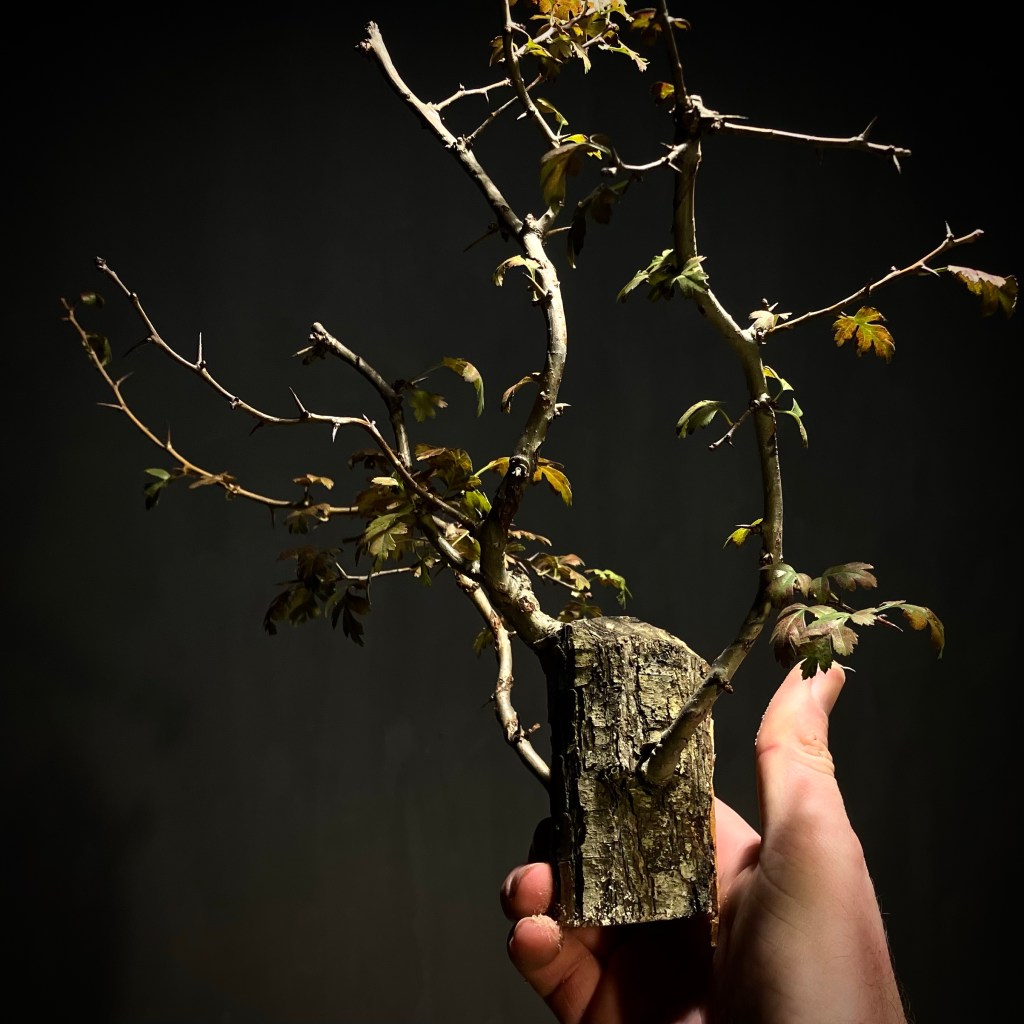
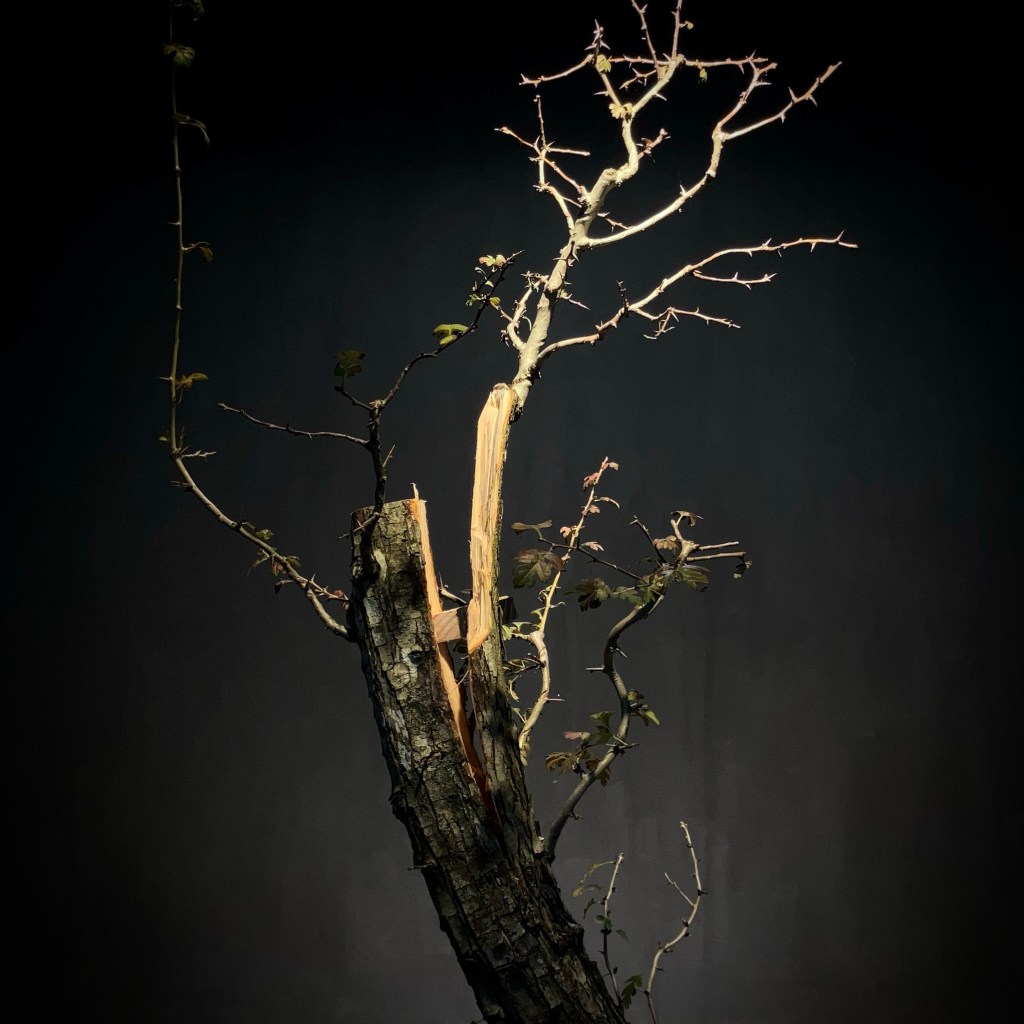
Summer 2021, a few months post collection a yamadori Hawthorn, responding well. This tree was a few metres tall in a densely packed group of trees, hence no lower branching and the drastic prune back required, leaving a stump. In hindsight not the ideal target for collection, let’s see how it progresses. Great bark though!Late autumn 2024, my continual learning highlighted I was fighting a losing battle here. Going back to the collection, not having any existing mature branching is a major consideration to how you approach the material from day 1 post collection. No mature branching means years of uncontrolled growth to get any sort of girth and balance with the trunk, something I hadn’t applied here. So now what?The tree had no introduced taper but did have some movement and interest lower down. Could I somehow accentuate the lower movement and correct the taper issue at the same time. Yes, but it was going to take the application of an advanced bending technique that I had never seen been done to a deciduous tree before. Let’s split the trunk and bend it!Creating the space and blocking it while working, being very careful here not to tear the living portion completely away. The goal is to split off a living portion that would continue to be the trunk line. Prior to this I had evaluated the tree to determine which section I would keep and bend.The first cut. Removing wood from the left side of the tree to allow access to the remaining split section. No turning back!Splitting further and wedging further down. The right side being the future trunk line. The split portion is not too thick that I cannot bend it. Too thin and the tree dies. There is very little malleability in the wood, but you do have to walk the line sort of speak. What you don’t see here is the already thick copper wire applied as a spine underneath the jute webbing. The same reasonings and methods of bending that are applied to conifers is relevant here. The copper wire is strong enough that it controls the force applied, with it you cannot bend it acutely (and in turn snap the branch in half). At the time I had jute webbing to use instead of raffia, both however will suffice. I wrapped the section of tissue that I was going to bend. This locks the copper wire tight in with the split portion. Looks like a project now! The jute webbing was then wrapped with black tape and heavy aluminium wire applied. Then with the use of guy wires and some rebar to pull to, the bending starts. The rebar was anchored in the split and allowed for a slight twist in the pull with the extended ‘arm,’ this had to be slight otherwise you will just tear the living section. Having bent as far as I felt comfortable, you might say, “you felt at all comfortable during that process!” Everything is on a knife edge, but you have to lean on sound technique to pull you through. At this stage although happy with the bend I wish I had finished the trunk line going up instead of down as you will see the correction a year later with the right inspiration. Spring 2024, the tree responded without issue to the bend. Aren’t trees incredible things! Spring is in the air 2025, I’ll prelude here, I’ve always been inspired by items I see and experience and for a month or so this past winter I had delved deep into Prunus Mume and some of the very old specimens found in Japan. Being a deciduous tree they have great bark and very interesting deadwood, in addition they flower too, creating a truly beautiful contrast. The spark was lit. I needed the continued trunk line to reach up, thus creating a more natural deciduous feel. The tree was wired with copper, why copper? Copper being harder to bend allowed me to bend the branches without snapping them. The same theory with the copper spine, I cannot acutely bend the wire. Yes there were tears along the way, but not a single branch lost, let’s be real bending an old deciduous tree’s branch is not normally done, maybe it will be now?
Having applied this technique successfully to broadleaf evergreen and deciduous trees, the actual success comes from knowing when to apply it. Would I apply this to a smooth bark deciduous tree, no. Would I apply this to create interest where it’s the sole focal point rather than accentuating what is already there, probably not. Let’s continue to explore!




 Two Islands Bonsai
Leave a comment