
Okay before we kick off here, there may be quite a few other reasons as to why, but in this blog post we are going to discuss and illustrate the fascinating morphology of leaf maturity.
The following images are taken from one single tree, all appearing on the tree at the same time. The images were taken around mid-spring and illustrate well the process the tree undertakes.
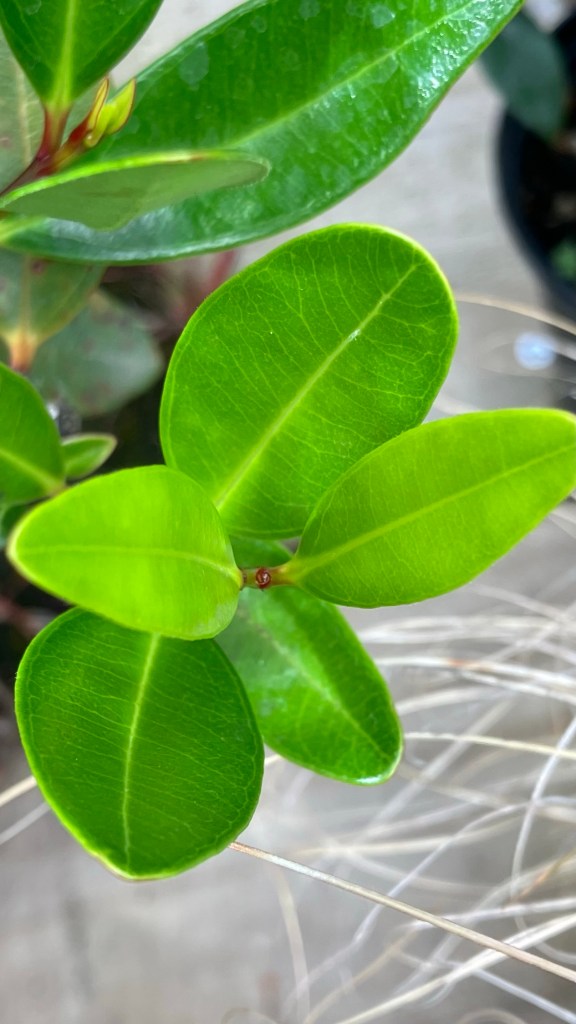


Okay with that illustration in mind, how do I get the tree to produce some or more mature foliage. Well the answer is pretty simple, you have to avoid the stress actions that warrant the tree to want to continue to produce juvenile shoots in favour of mature.
The most common stress inhibitor is pruning. It’s an action that is performed the most frequent and without knowing it, it is probably the main stress inhibitor that is causing your tree not to mature. This is why we commonly see the glossy foliage on our Pōhutukawa bonsai. Now hold onto that for a moment when we consider some thoughts below.
Yes a young tree needs to mature and this can take up to 10 years as per some studies. In this case we are often letting the tree grow and thicken. On a side note, it’s worth noting that the cultivar ‘Māori princess’ seems less likely to revert/ produce juvenile shoots when pruned back heavily.
Some points to ponder as we close up this blog post!
1) Can you develop a Pōhutukawa faster into a bonsai using the vigour of juvenile shoots?
2) Can you then transition this to mature foliage after development without losing that development work?
3) If flowers are not within your desired future composition can you keep your Pōhutukawa in a juvenile state for ever?
These are all things we are exploring in our own garden and with our clients. We have a fascinating example that we are observing and hope to bring you the results early next year.

 Two Islands Bonsai
Leave a comment