
To the best of our knowledge this may be the first time this has been successfully attempted in New Zealand on a yamadori Podocarpus Tōtara in bonsai cultivation. If you are a follower of us on social media, then you might have already seen the original footage of us grafting this tree in 2024, if you haven’t yet, I’ll drop the link here.
What follows is a bit of background on the technique itself and photographs at each stage of the process.
What is it to perform a ‘change of dress?’
Quite simply put, it is to change the foliage type of a tree from its existing form to something else through grafting techniques. There are limitations, ie generally grafting is done within the same species/ genus.
Why would you perform this technique?
Generally this is done because the existing foliage characteristics are not wanted or can be ‘improved upon’ with a replacement. This may be because of personal preference; colour; inherent characteristics; behaviours; coarse vs fine or even the size of the tree in question.
In Japan and across the world this is widely practiced in the bonsai scene and most often associated with Junipers.
How do you perform this technique?
This is done by grafting new foliage on from the donor tree with the type of foliage that you want. Once the grafts have then taken, you can then slowly remove the old foliage until it is all gone and only the new grafted foliage remains.
How long does this process take?
This can vary greatly, ie what species was this performed on; how many grafts and what type of grafts were done; how much foliage you are replacing; the vigour of the tree in question etc. The timeline for this tree was:
– Approach grafted in July 2024, signs the grafts had taken were seen in early summer 2025.
– Grafts taken and seperated in May 2025. Large reduction in original foliage done at the same time.
– The remaining original foliage was removed in November 2025.
So just over a year from start to finish, see pictures at each stage below.
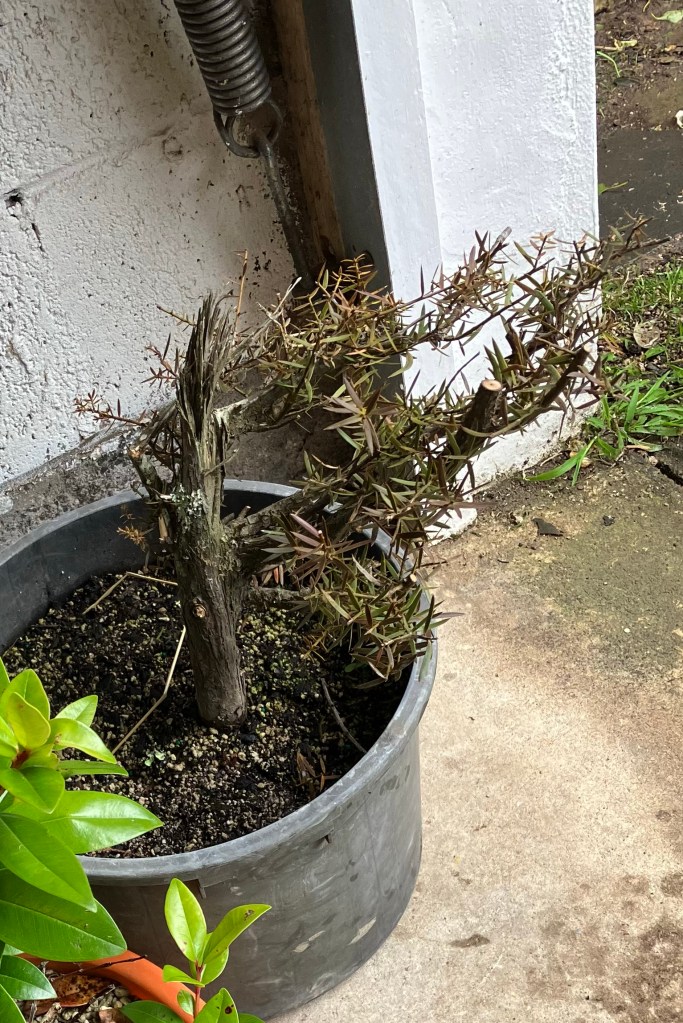
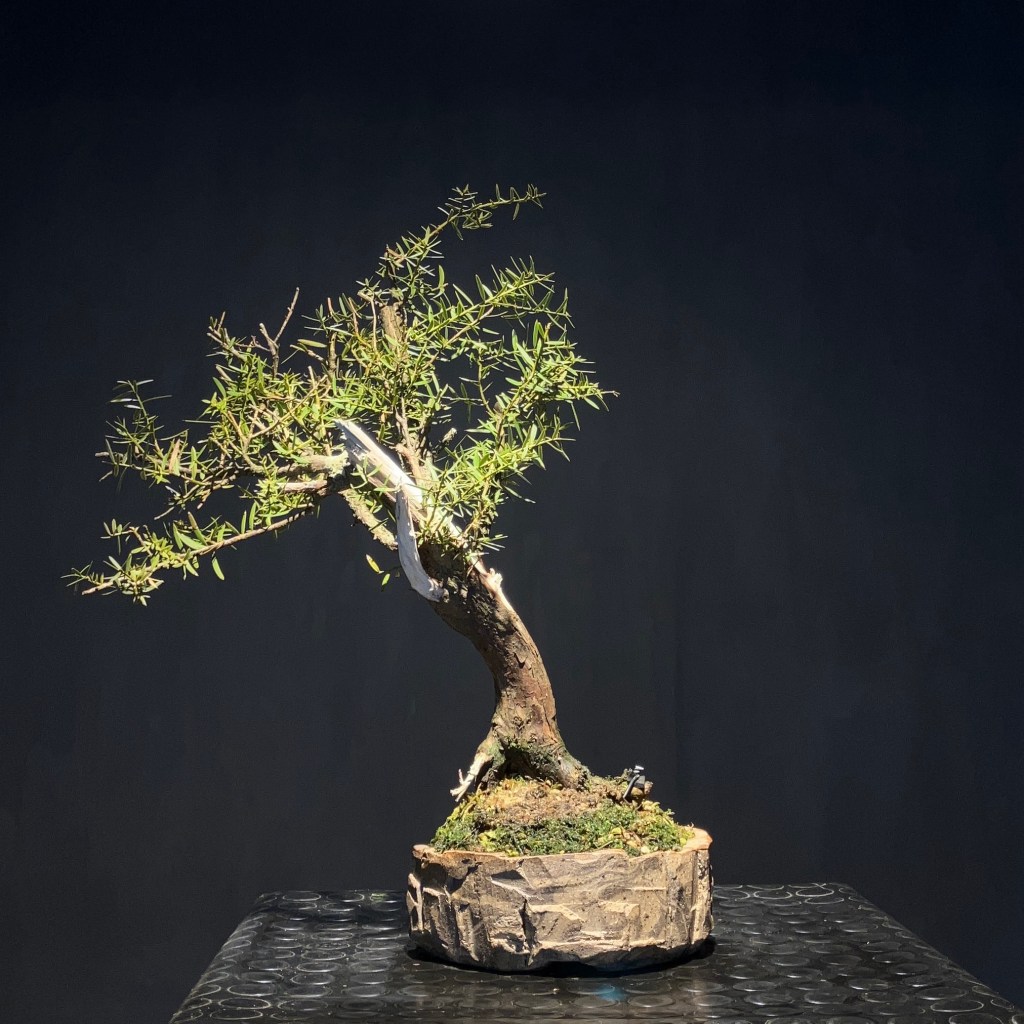
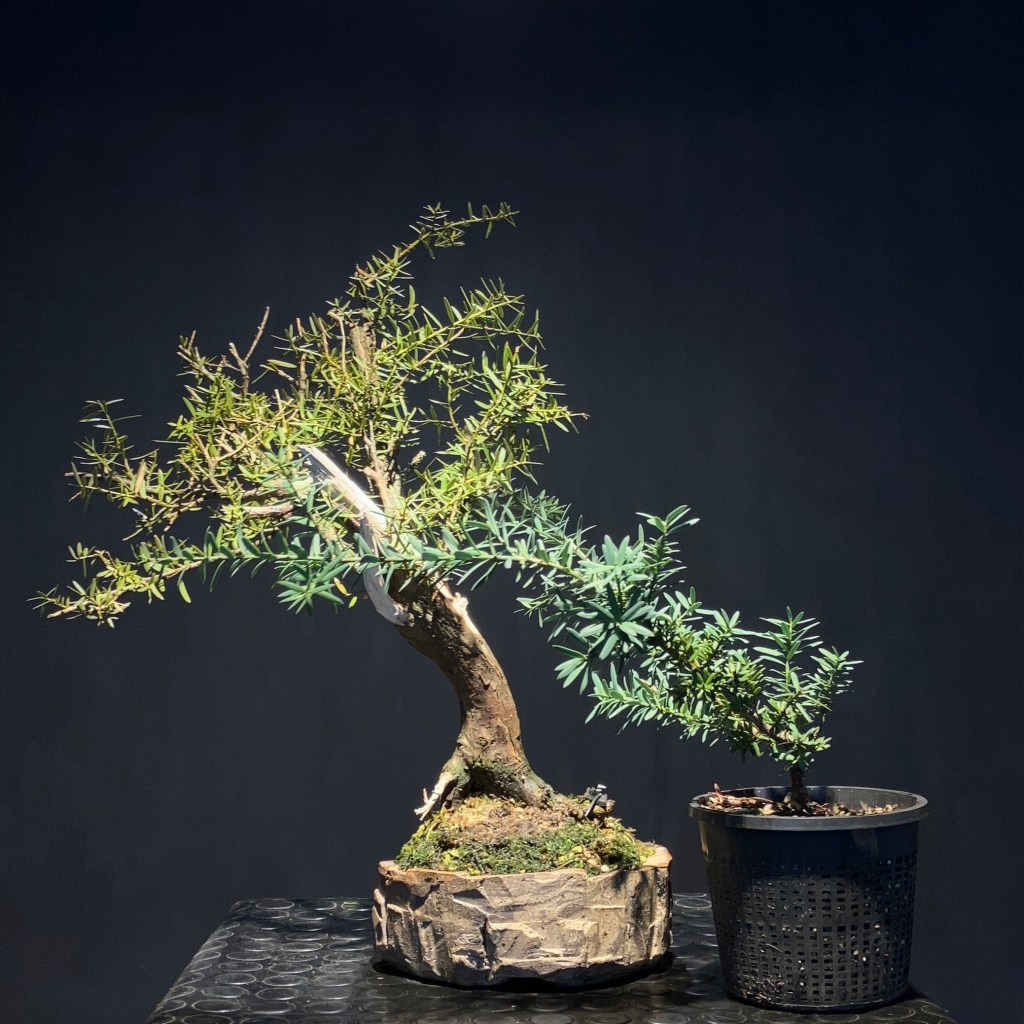
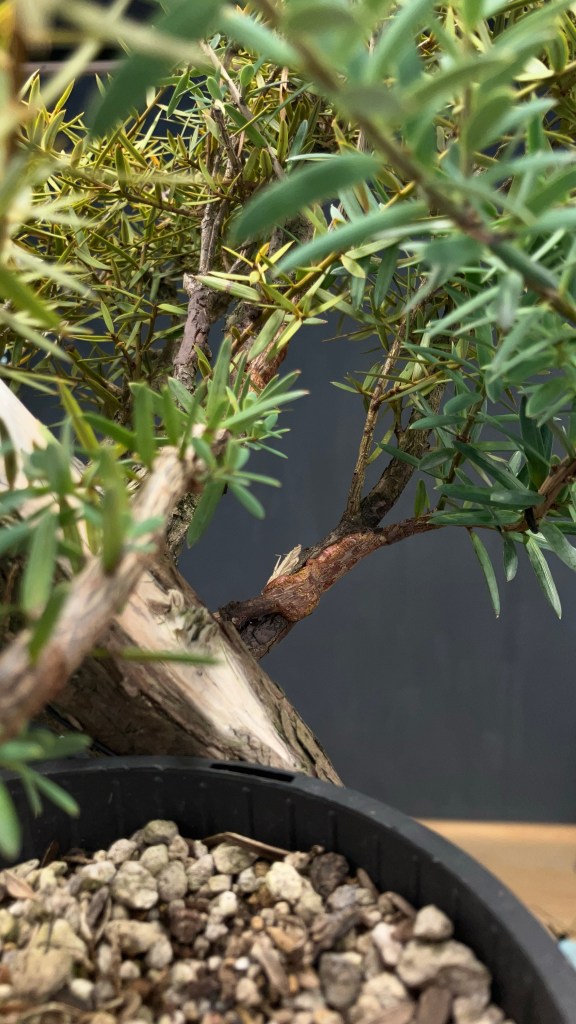
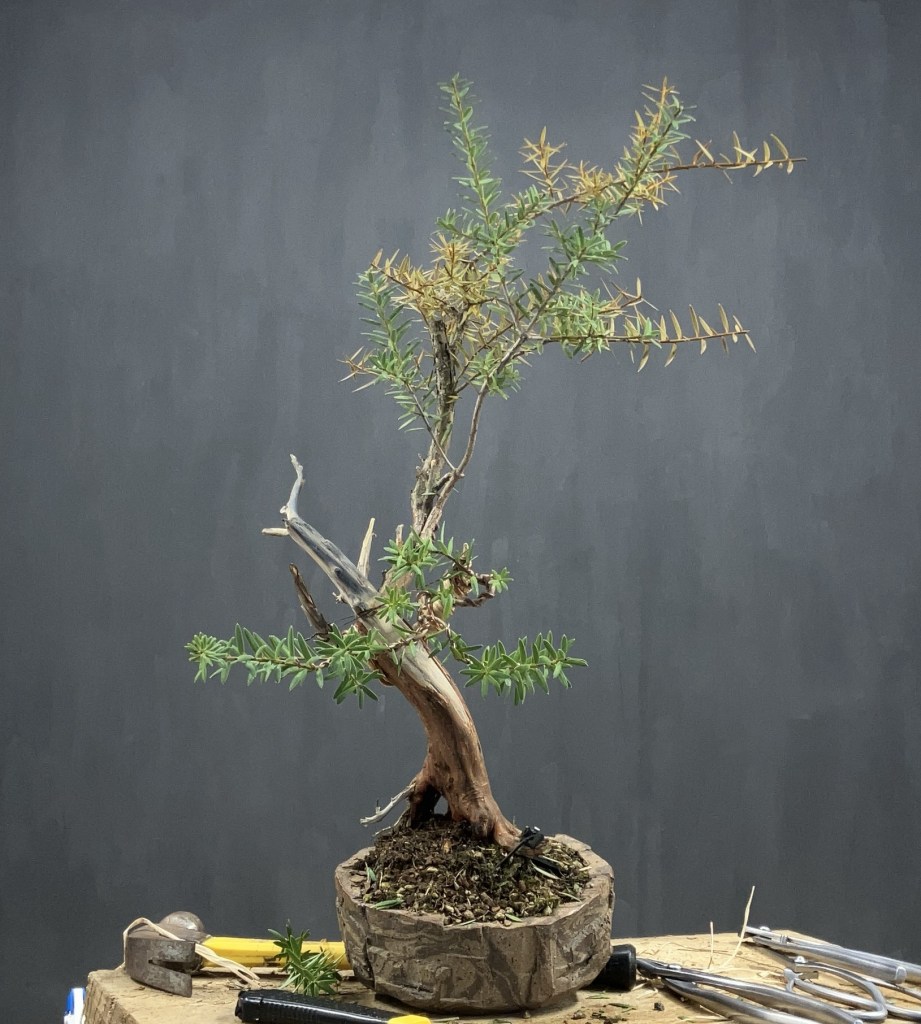
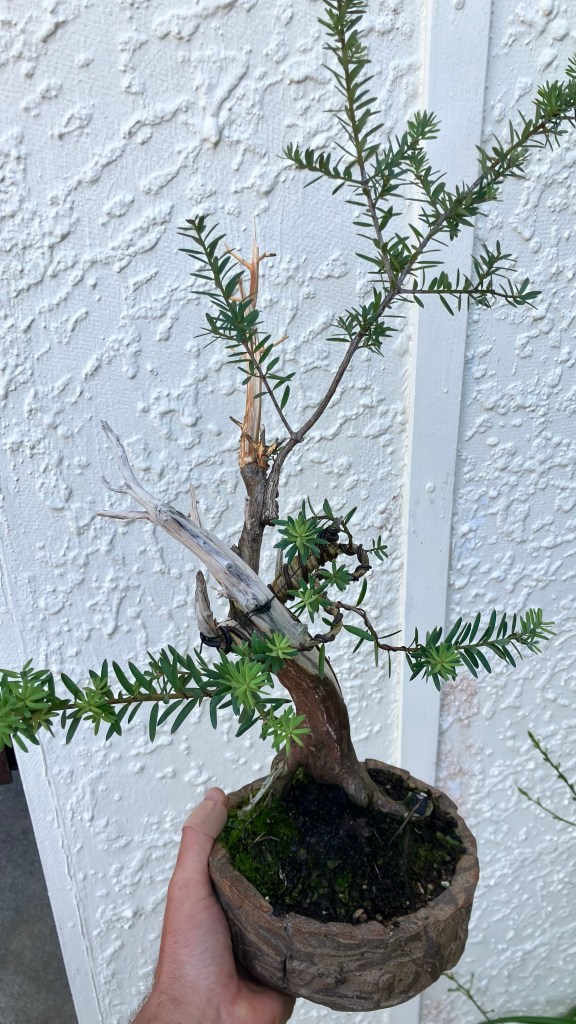
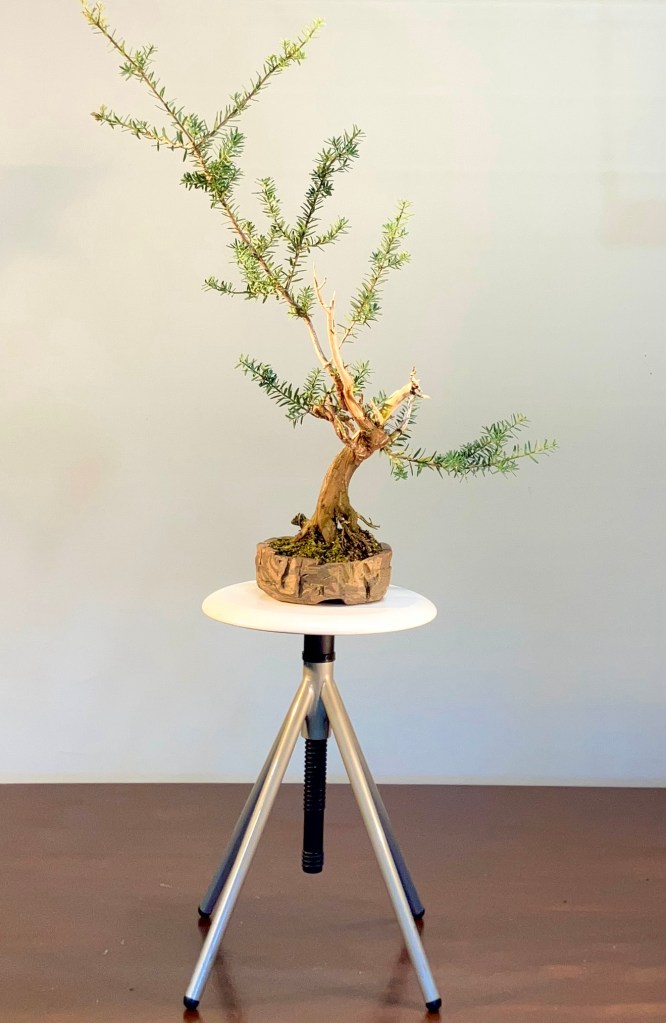
I’ll geek out here a little bit at the end. Why would we do this may extend a bit deeper ie, climatic + cultivation conditions. If it’s not already known, Podocarpus Tōtara can handle more dryer conditions than the cultivar Matapouri blue and conversely Matapouri blue can handle a bit of shade better than the Podocarpus Tōtara. When I say ‘better,’ that will be a discussion for next time.
I plan to do a follow up on this later this year and we’ll keep following this tree’s journey as we make decisions/ carry out work.
 Two Islands Bonsai
Leave a comment