Following on from our initial blog back in January 2025 where we documented the process of how we prepared the ground-layer of the Camelia (see link) https://twoislandsbonsai.com/2025/01/26/the-flower-tower-ground-layering-a-camelia/ . We now focus on what transpired afterwards up until when the separation took place and how it is now currently performing.
Following the performance of the ground-layer technique there were no visual signs/ differences in the growth of the Camelia. The vigour of the tree was consistent with prior years. The tree also existed in similar light cultivation conditions (not full sun). The major consideration however was watering. I was watering less than normal, misting the tree more frequently and when I did water I didn’t simply water everything. I mostly watered the original root system so as to not keep the new box of soil soaking but rather moist. A tree will reluctantly want to grow roots in an environment that is unfavourable, so our job is to make it as inviting as possible. Striking that balance can often be walking the line between success and failure. Oxygen in the system is your friend! As the tree produced roots at the new ground-layer site, the watering slowly shifted from more in the new box of soil and less in the original soil system. The visual cues to identify when to do this is how quickly the soil system is drying out, there is no set time frame I’m afraid, only observation and experience can guide you.
You often hear people say watering is the most difficult task to learn and it’s true, but from our experience this is only true when you are pursuing bonsai on the highest level. Why? Let’s leave that for another blog post.
Okay back to it. We performed the separation in early autumn (March 2026). That is just over 13 months post and up until this point all the growth had been left unchecked, fuelling those new roots.
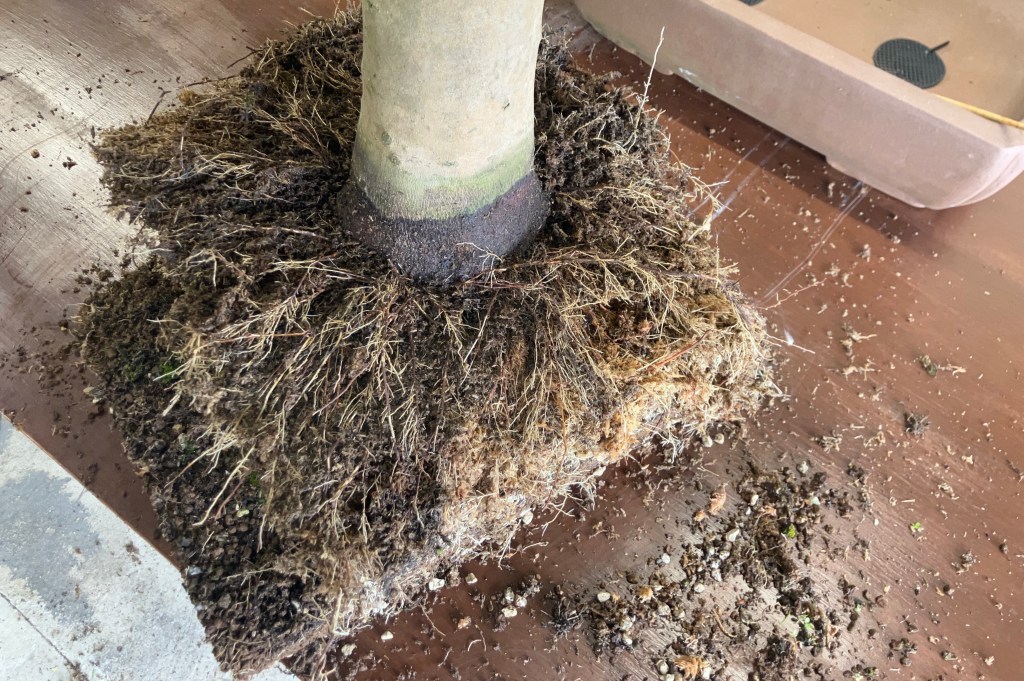
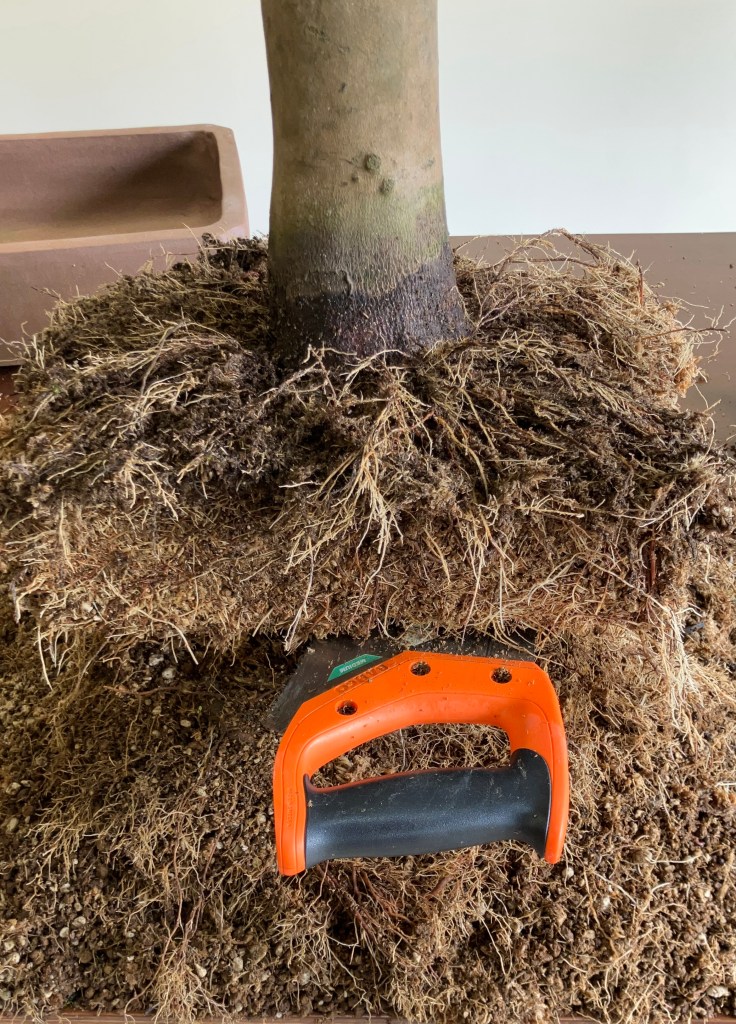
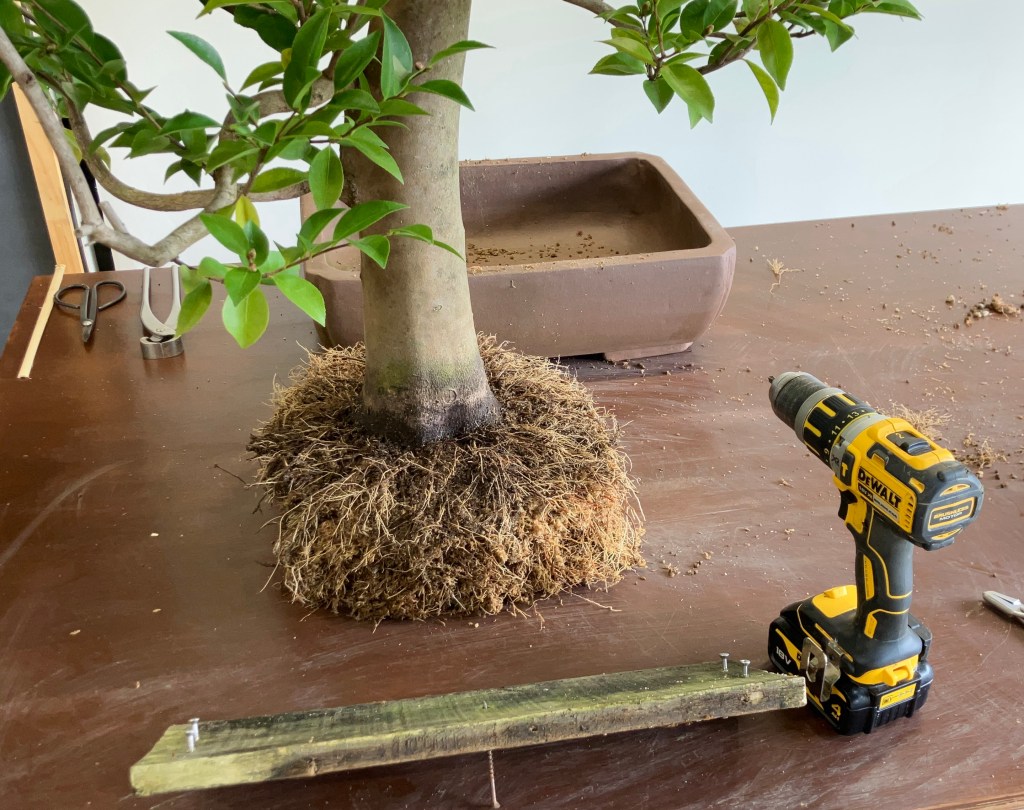
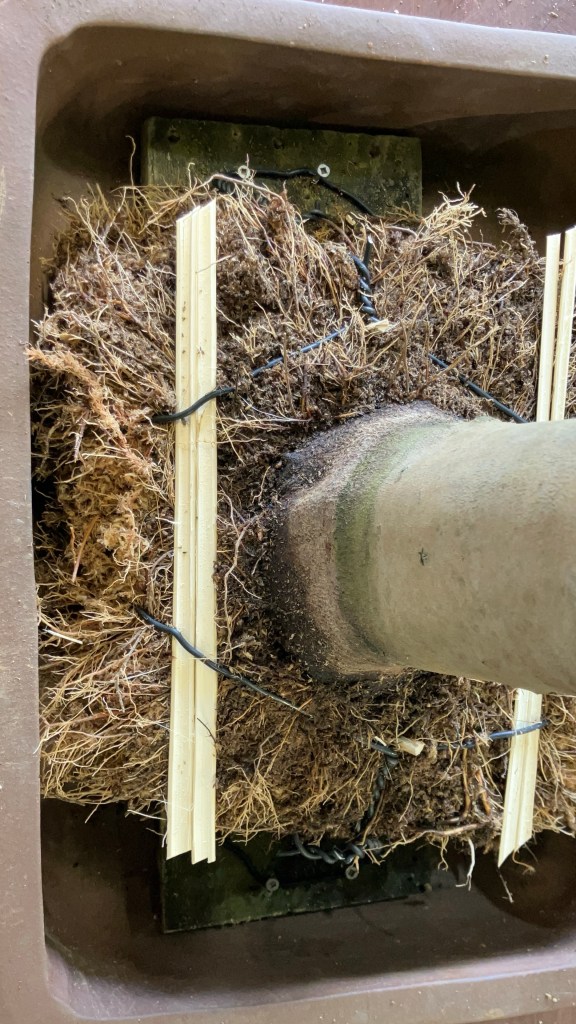
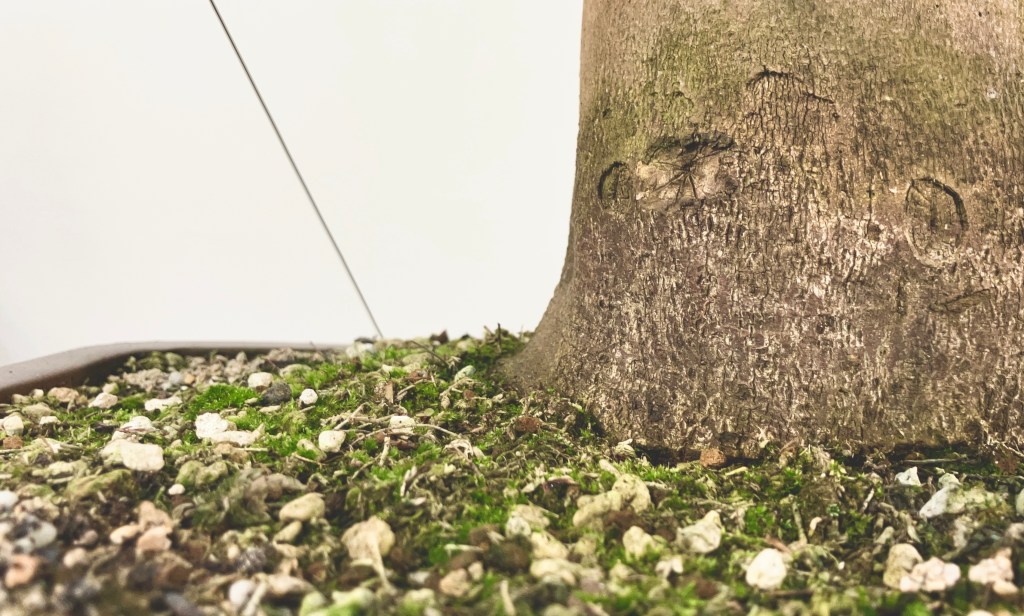
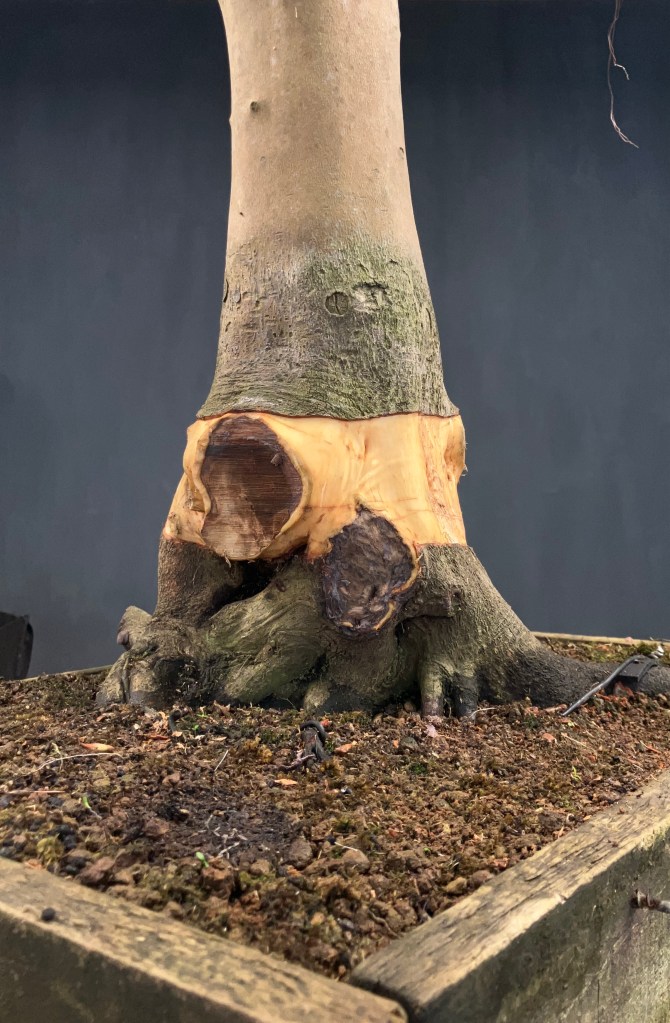
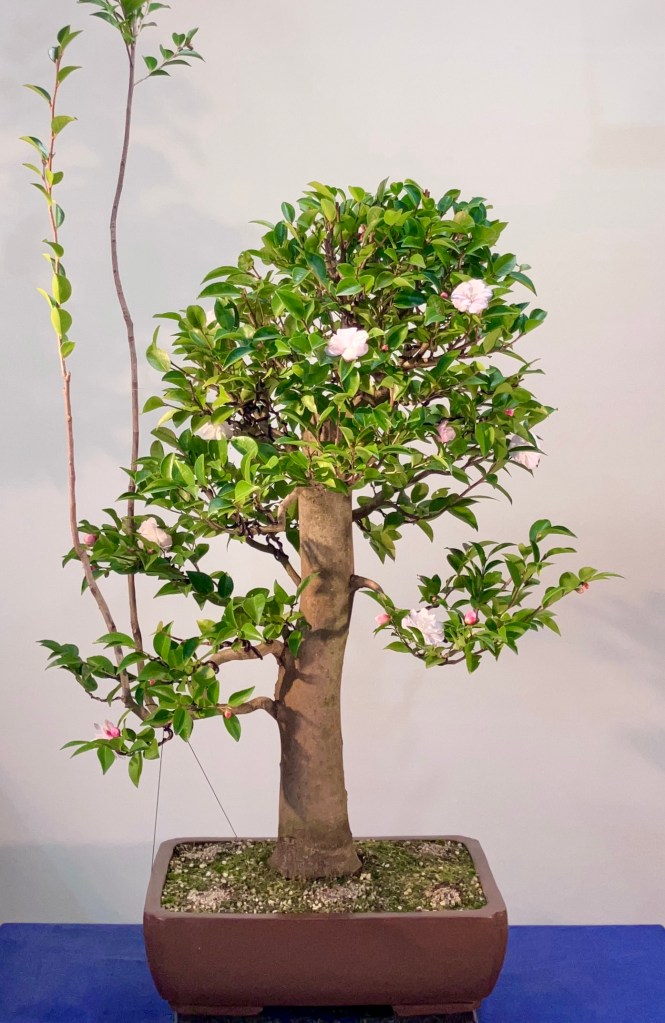
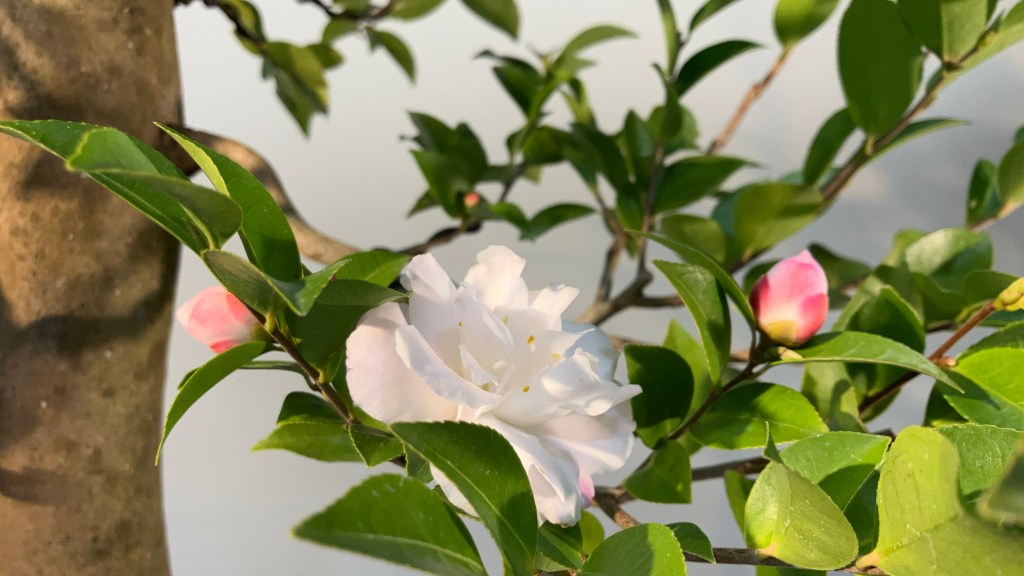
A look at those new roots. A great 360 degree spread. At this stage all I’m doing is gently combing out the roots radially, I don’t bare root or wash them at all and if you remember back to my original post we used a mix of pumice, akadama and sphagnum moss for the soil mix. So a decent soil foundation to build on.I need to add a reciprocating saw to the toolbox! Wow is Camelia wood hard! This had me out of breath, I’ve got a video of that but I’ll save you having to see that! As to the height of the cut, well technically you can go right up to the top cut of your initial ground layer but in this case because it is a flowering species, the tree will exist in a deeper pot and so I chose to go lower. Not like in the case of a Japanese maple where I would have flattened it out and attached it to a wooden board.Stability! The unsaid key to success! This tree cannot move once potted up, it will fail. So here, I screwed a wooden board to the base of the tree, which then allowed for further fixing points when tying the tree into the ceramic.Stability! I will say it again. Further to the board I use bamboo across the top and tie down over. More points of security, the tree firmly tied down. Notice the flare at the base. This is partly because of where we chose to make the cut for the ground-layer, and we can expect this to only become more and more pronounced in the future. If we were highly critical of our work, which we are, I would have liked this sitting +-1 cm deeper in the pot. This just helps with the cultivation of that future nebari a bit better. The soil mix is a blend of pumice and akadama.It’s a daunting sight no matter which way you look at it! Look at that original horrible base! We have affectively disregarded this for a brand new start in the space of just over a year!(June 2026), 3 months post separation. The icing on the cake! We didn’t expect to have a show of flowers this year as well. The tree hasn’t skipped a beat and we can only look forward to its progress in the coming years. This tree is only 4 years from collection.A close up of the flowers and buds, as this was a collected tree the cultivar was not 100% known, although my research since leads me to believe it is a popular hybrid ‘Cinnamon Cindy.’ The flowers are classed as miniatures which adds another tick to this already promising tree.
Looking back on when I chose to perform the ground-layer, there was no freely available resource that I could find that detailed when to attempt this, let alone how the species would react. Now, excitingly, we have that information!

 Two Islands Bonsai
Leave a comment