
In this mini two part blog we discuss the process we go through before commencing work and then we take a dive into design fundamentals and approaches on a collected plum tree.
Part 1:
Shifting the mindset. What do I mean by that? As a bonsai professional one of our most important tools is the ability to apply varying styles/ approaches to the needs of different types of material. The question of what I like is not imposed on the tree, especially if this is a clients tree! (We will however always advise a client on a course of action that may be the best for that tree.)
For example, in the morning I could be re-scarring callus on a trident maple wound to encourage it to heal over and in the afternoon have the hammer and chisel out to gouge out some wood on a gnarly plum to create some interesting shari. Two very different approaches.
So how does this help you in your collections. Well, the main point of today’s blog which leads into part 2, is that by understanding there are different approaches available and having your mind open to these possibilities, it will dramatically improve your ability to envision and ultimately design a tree. The more closed in you are with your approach the more and more every tree will start to look the same and the essence of what might have made that tree special on the workbench might inadvertently be lost.
It is very easy to get stuck into a rhythm/ mindset/ approach so here are a couple of things I do when needing to step back and re-focus.
1) Clean start, clean mind!
Having a neat and tidy work space before working on a new piece of material/ established tree can really give you the blank canvas you need to approach the work fresh. Removing actual clutter, congestion and excess physically is a precursor for the mind.
2) Study the tree.
What makes this tree special! Often the special features like its bark, deadwood, movement etc can guide you down the right path of how to approach the styling. Don’t be in rush to remove the ‘non-conforming.’
Part 2:
In part two we look at the recent work undertaken on a collected plum and the design approach and its fundamentals.
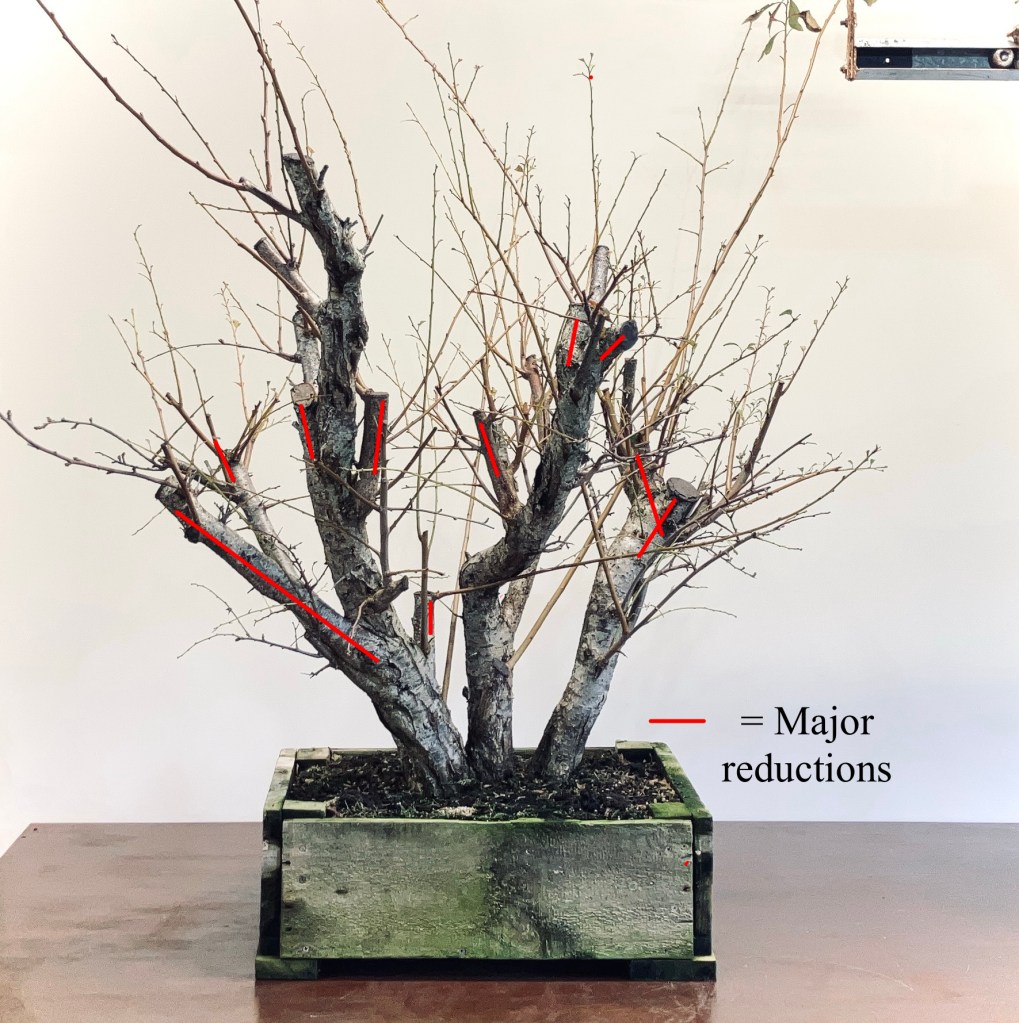
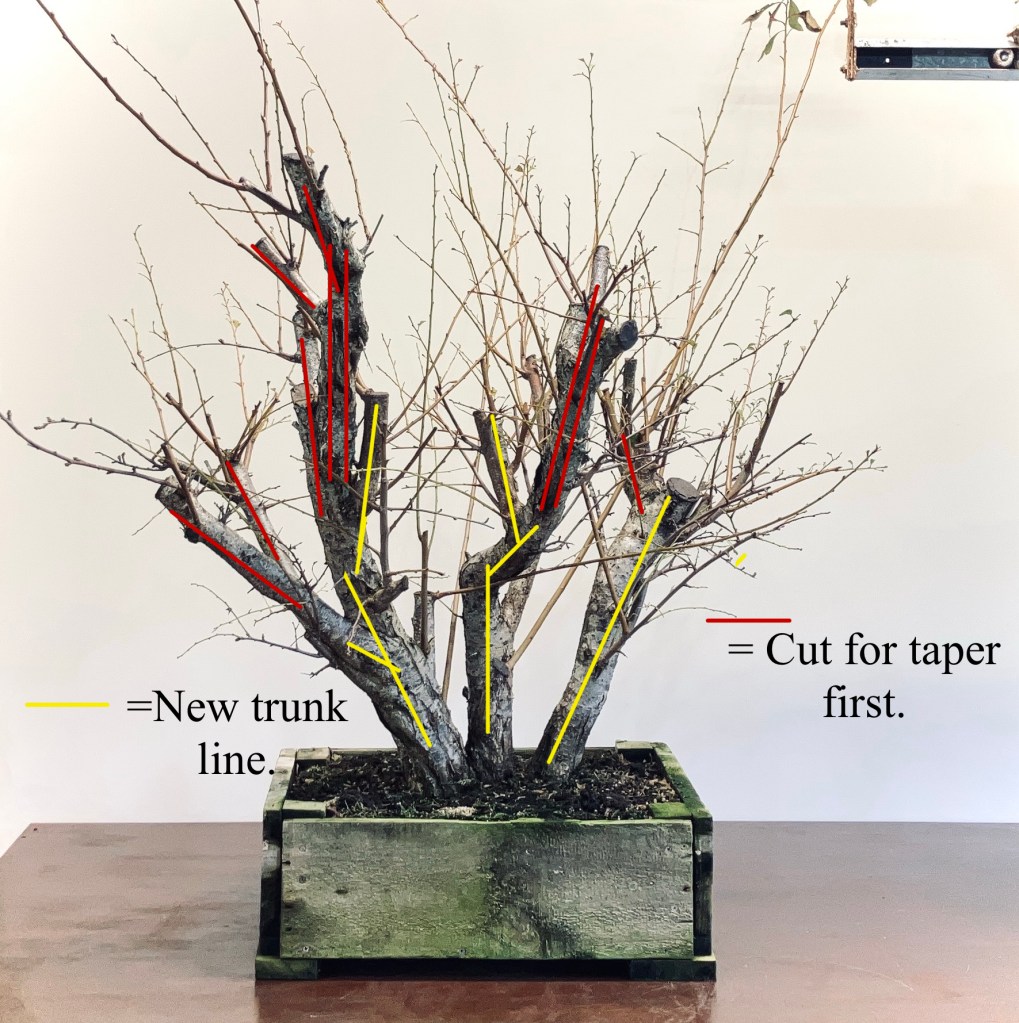
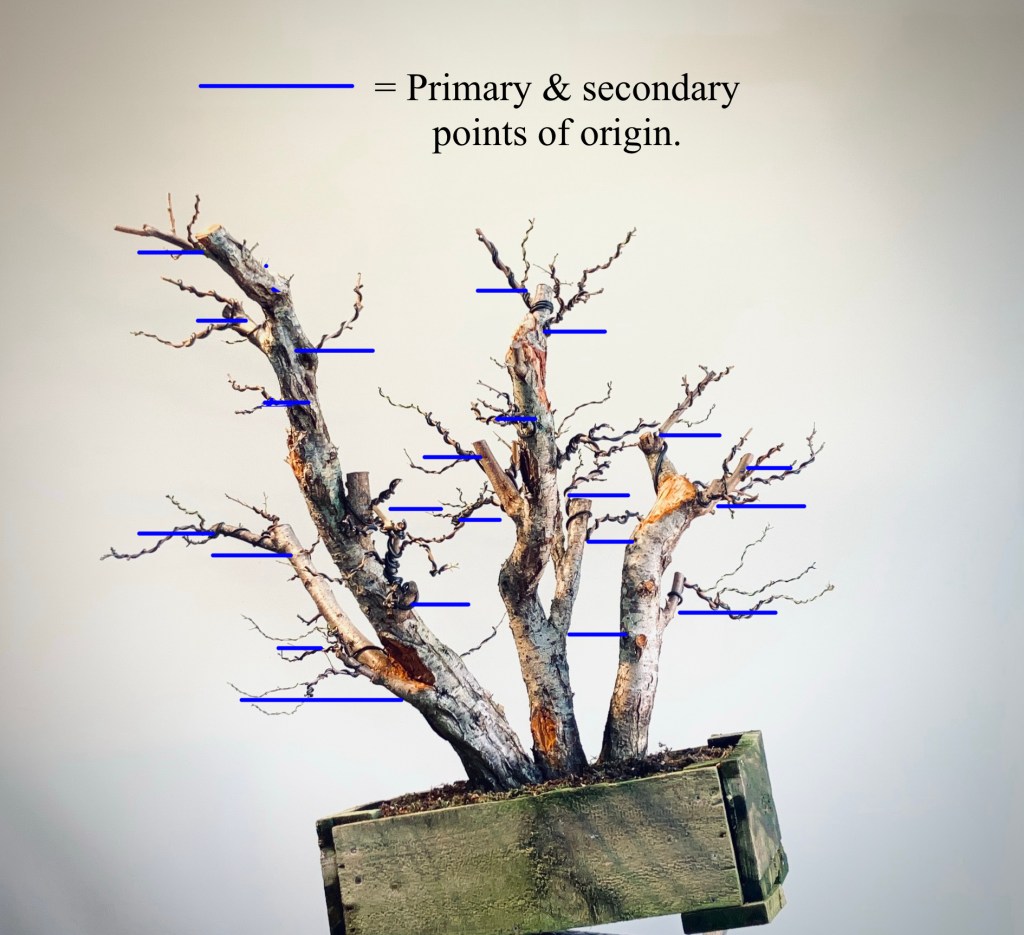
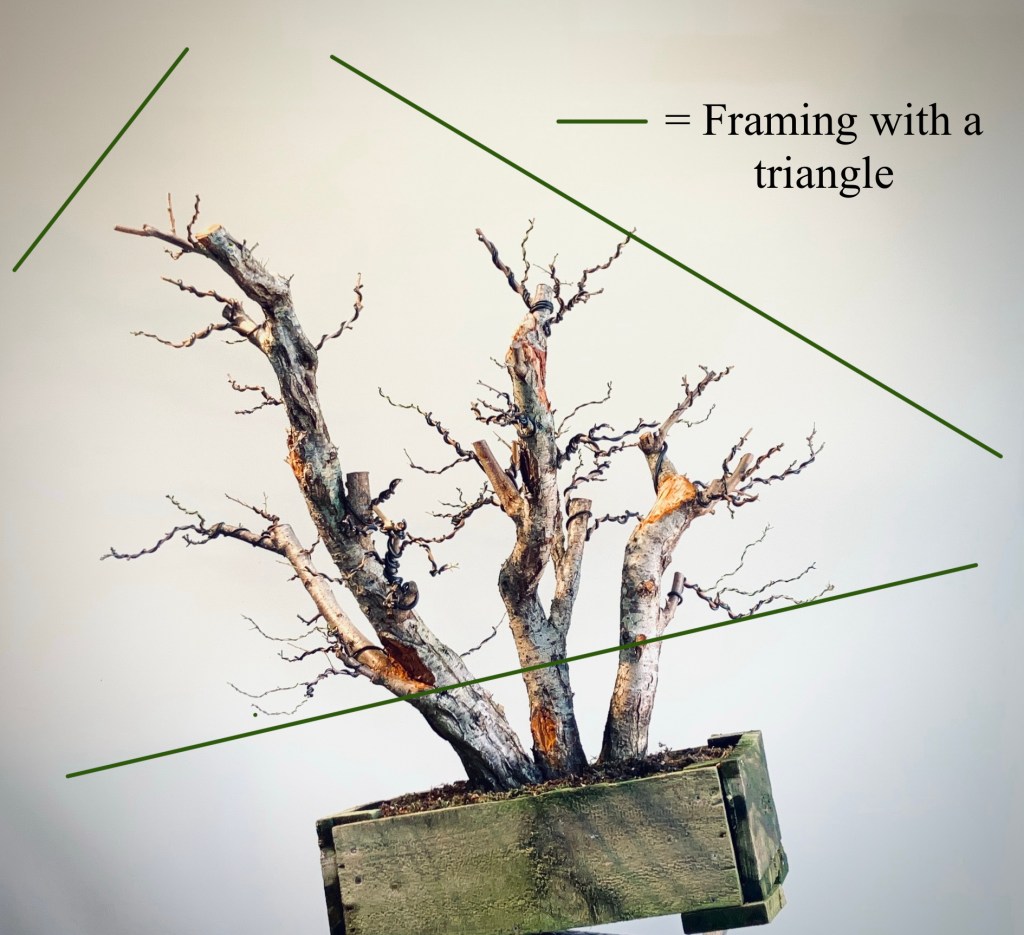
the lowest branch on the main tree might not end up being the furtherest branch away from the trunk, but rather the branch above it. This is where we start talking about directional/ key branch. What the triangle does illustrate well is, the possible future silhouette of the tree and where one can grow in the gaps.
In conclusion, if we clear our heads and approach our work fresh, we will more often than not achieve an appropriate design rather than something forced.


Leave a Reply