
It surely must be one of the first things you hear being said when finding yourself fresh into the New Zealand bonsai scene, Pōhutukawa make great root over rock bonsai!
The unfortunate reality however is that there seems to be a disconnect between what we know should be the case and the ultimate outcome. You just don’t come across a plethora of great examples. So why is that, and what could be possibly going wrong here?
Before we dive into those possibilities we first have to define what makes a great root over rock bonsai. Putting aside the canopy design/ structure for now and how that flows with the rock, let’s concentrate on the two main things; the roots and the rock.
The position and size ratio of the tree on the rock. A simple but all so important step. 9/10 examples I’ve come across of root over rock this is where they seem to stumble. There isn’t a right or wrong answer when it comes to the placement but there is definitely a more preferred and more interesting outcome, the key word interest. If you can create interest, a story line, and ultimately a vision that the tree has been growing there all its life, well then you have succeeded! However using too small of a rock only to see it disappear from view despite your best efforts, well, it’s a story but maybe not the one you were aiming for.
Secondly, is there cohesive adherence of the tree to the rock, do the roots grasp/ melt over the rock with little to no gaps. Leaving a large gap between the tree and the rock generally takes away from the vision that the tree has been there since inception and from a design point also creates instability.
Next is the rock itself. Has the ‘right’ type of rock been used in the composition and is the rock being showcased? What I’m referring to here is, are there exposed portions of the rock in view and are these areas themselves inherently interesting?
Finally, looking at the movement/ flow of the roots over the rock, is there interest? The more movement, generally means more interest.
Okay so now that we have briefly touched on what constitutes a good root over rock bonsai, let’s move on to what might be going astray here in the development process.
Development Technique.
The first thing someone will say is ‘stick it in the ground and forget about it for a few years’. Now while that may work to a certain point I want to offer an alternative here as I think this may be one of the broken links in the chain of disconnect.
We know Pōhutukawa are aggressive root producers and also produce aerial roots, some cultivars produce even more than others! I’m talking a lot, like rival a ficus in high humidity! Now what if we can use those aerial roots to our advantage! So where am I going with this?
If we can utilise the production of the fine aerial roots to form the foundation of our root over rock bonsai, that will mean they will fuse/ melt into each other much easier and quicker than larger roots would.
It’s a well known/ practiced technique when developing a plated nebari on a Japanese maple to use the fine roots to merge/ fuse together, rather than the larger ones. Well, the same principle here. Aerial roots also have a tendency to creep along the surface forming a tight bond with the rock, creating contour and leaving minimal gaps. Yes, they will have to be tamed!
In contra, If left to its own devices in the ground you generally end up with very large thick round roots that adhere to the rock but have not melted to the rock. Let’s face it, nothing good comes quickly and if it was this easy we would be seeing 1000’s of these trees. In reality it takes a far more controlled process to produce the highest quality outcome. (A quick side note if you haven’t already guessed, nothing in bonsai is done once and done, it is rinse and repeat to varying degrees for ever…we hope!) Come to terms with that mindset and the joy will be further unlocked!
Ok back to it!
Working above ground is what I’m eluding to here as the alternative, allowing you more control of the process. If you can set up the foundations and then control the acceleration via the pot size the results will come and will be superior. Think of it as seeing something good and wanting more of it, versus not seeing anything but going full tilt to finally have a look and it’s gone in the wrong direction. What’s the caveat? You need uncontrolled top growth/ vigour for accelerated root growth. You will see in the example below of how quickly that will happen, even in a pot!
The positioning of the roots on the rock at the very beginning is so important and if not done well, you could really be fighting an uphill battle from the start. This potential problem again is only exasperated if the process is left untouched underground for a few years.
Yes, I hear you, but not all trees start off with an abundance of aerial roots! My answer to that is still to use the finer roots when making that initial placement on the rock. I wont go as far as to say you must start this process with a young tree so you have more malleable roots, because you may come across a mature tree where you can achieve the result (see below). What it ultimately comes down to, is using the right roots from what’s available. Don’t expect a large root with a big gap between itself and the rock to magically sort itself out over the years.
Okay that’s a lot to take in, let’s look at the example.
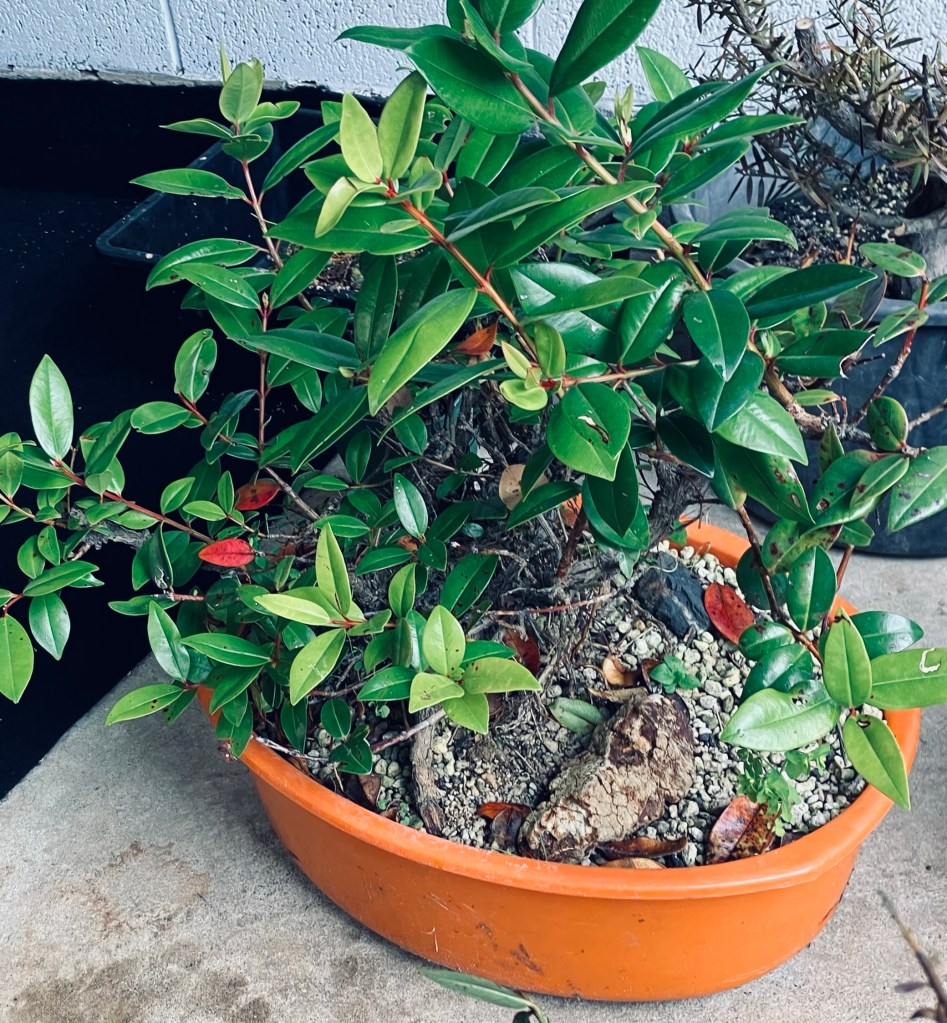
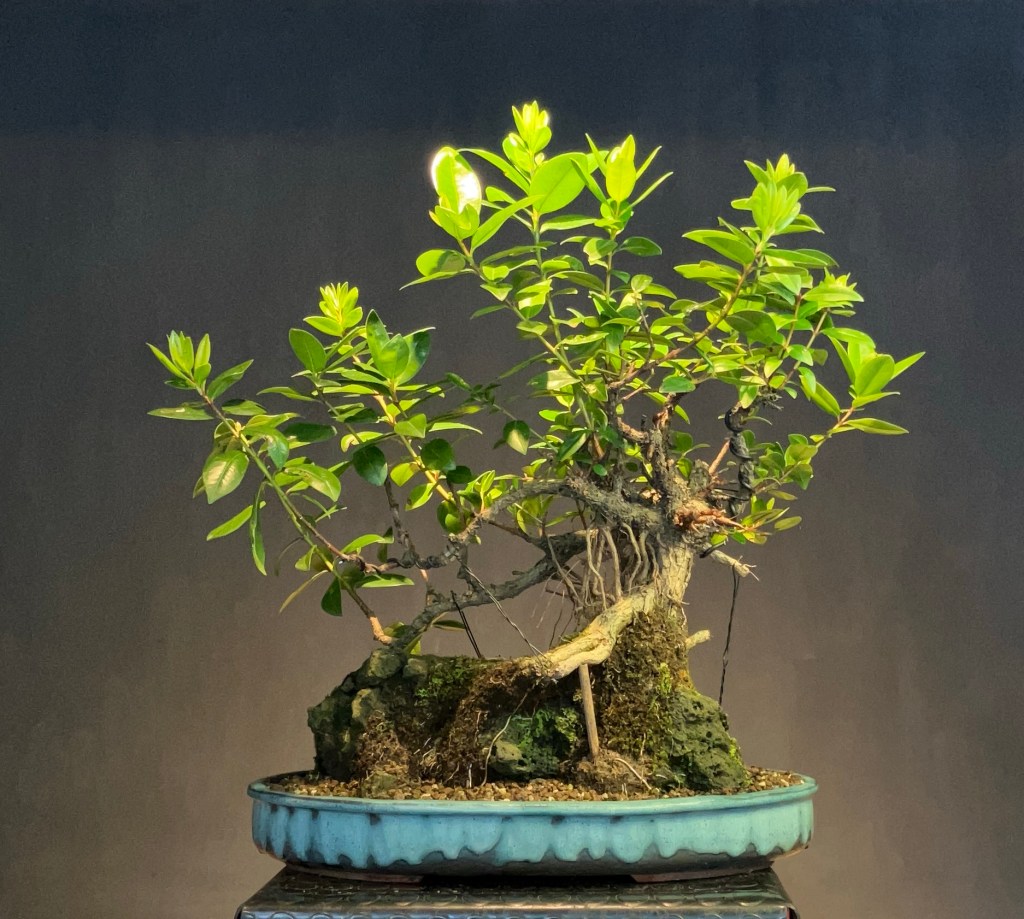
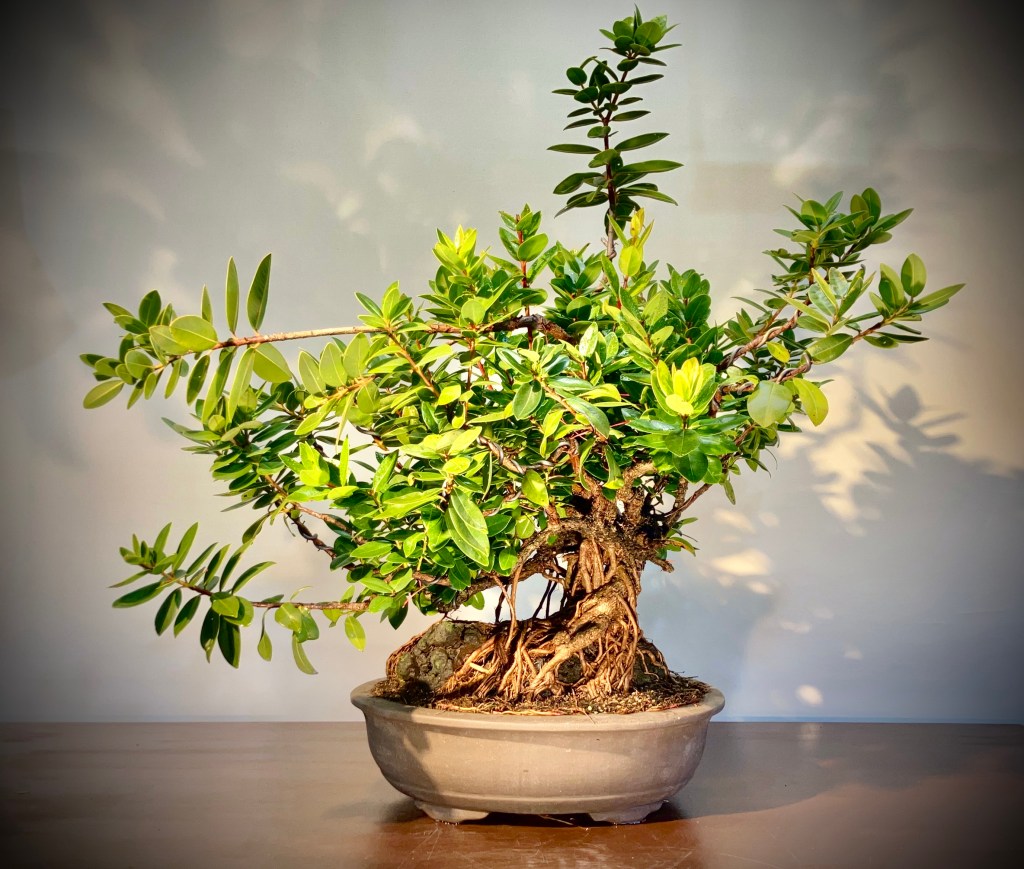
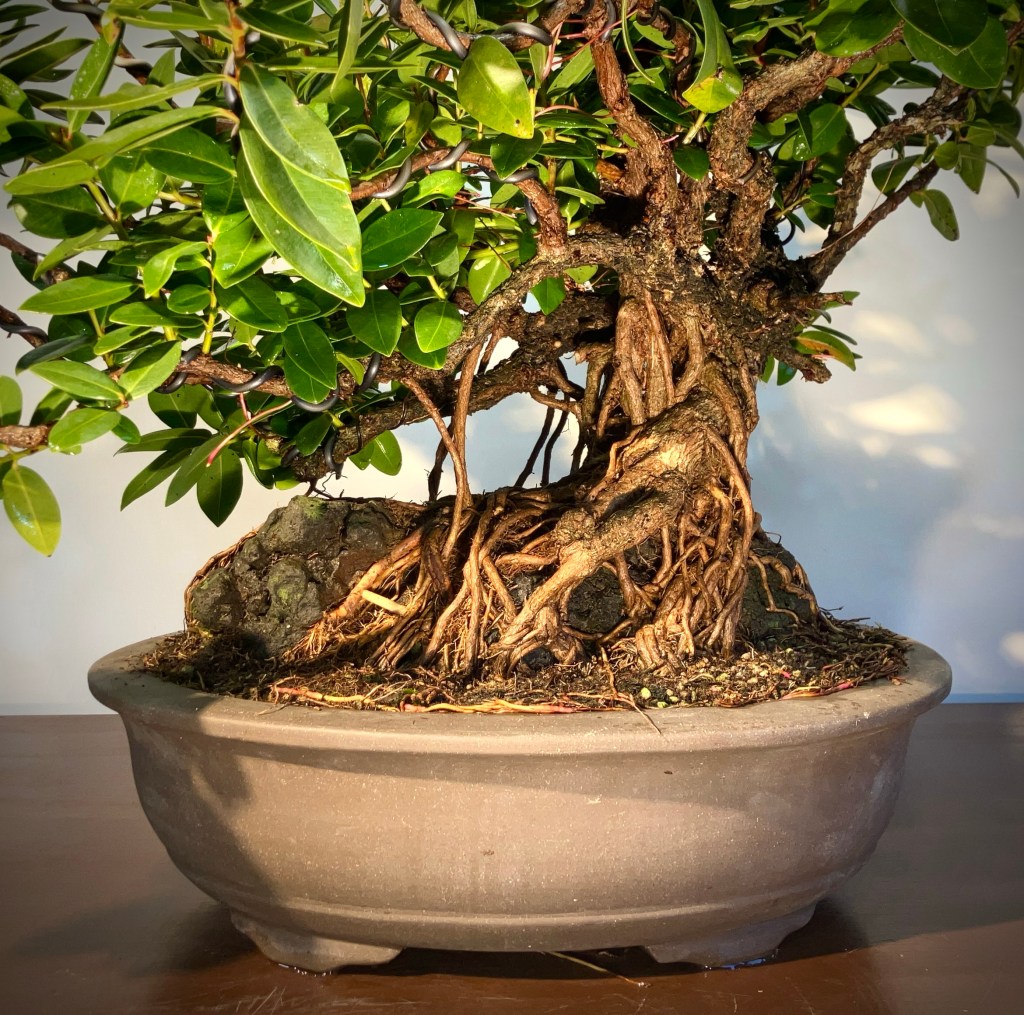
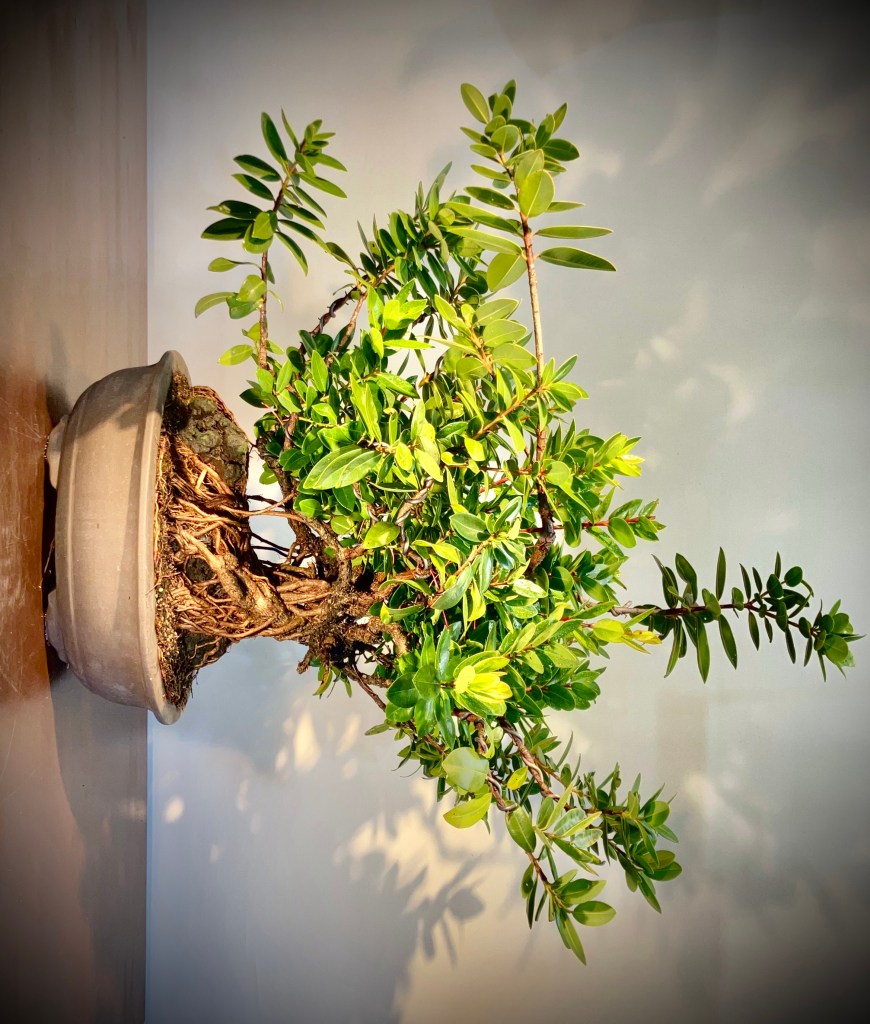
I couldn’t leave off without addressing the elephant in the room. I can hear it, the good examples are gone because the trees have absorbed the rock…and yours will too… To this I say a few things. If you get the wrong size rock to tree, yes it can happen. If you leave the process unmanaged, yes it can happen. However you have to remember, you control the outcome, you control the accelerator and you control the amount of time you put in.
There’s always an alternative, there’s always a balance. Find the combination of techniques that will best achieve the outcome.


Leave a Reply