
From one bonsai blog to another!
A few months back Michael released a blog post introducing bonsai artist Sergio Cuan (a great read!). Once I had finished reading it, I immediately thought, this is such a fantastic idea and how can I get in contact with Michael, and in a manner of speaking continue the chain, but with a slightly different twist on it.
As for the twist, I thought this would be a great opportunity to dive into some deeper discussions/ thoughts with Michael by offering up a few discussion topics.
However before we get into those I’ll now hand over to Michael, where we quickly teleport to the Northern Hemisphere and get a glimpse into his current activities and maybe a short introduction into himself and his practice.
Over to you Michael!
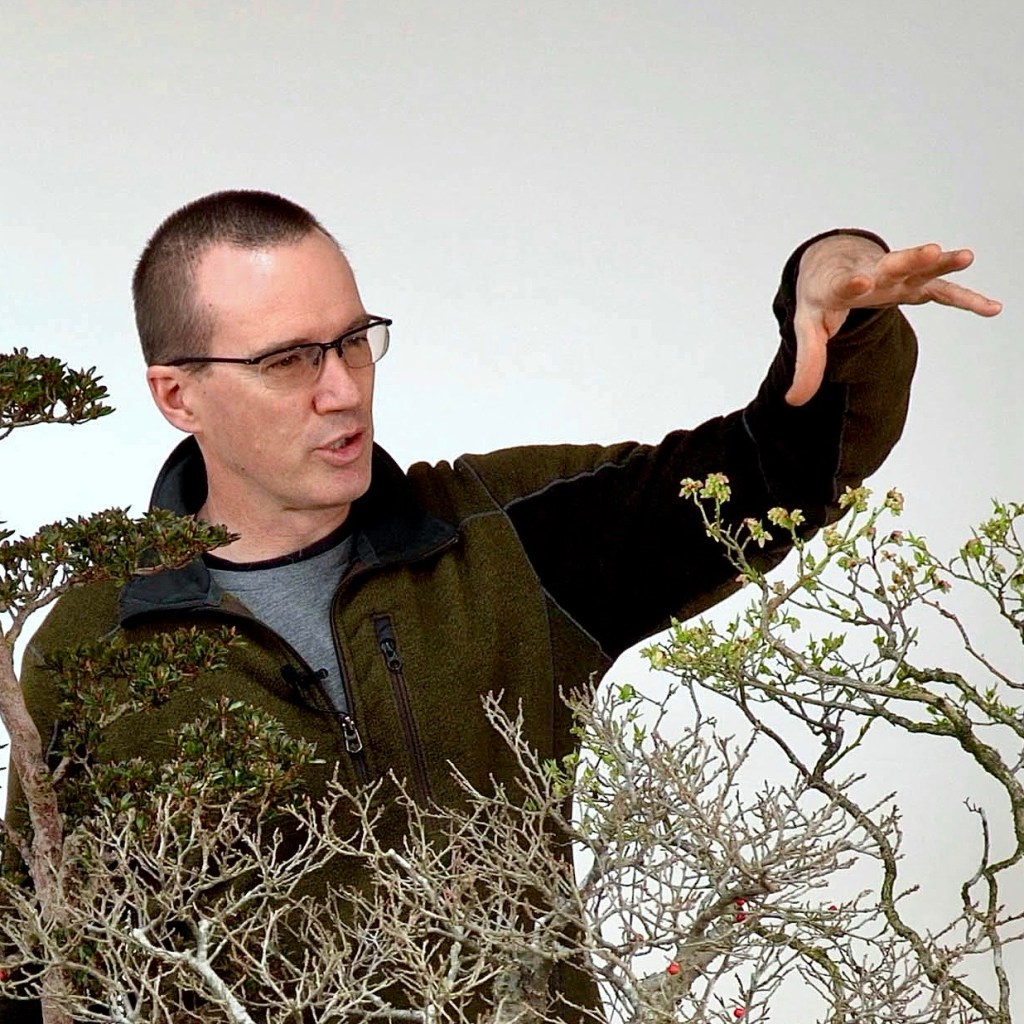
Hi Robert, and thanks for offering this platform and a chance to say hello to a new audience! For those who don’t know me, I live in the Pacific Northwest of North America with a temperate but mild and long growing season for just about anything but citrus. Currently my apprentice, Patch Clark, and I are recovering from my teacher’s visit in July, and have discovered that the fleas on Vivian, the cat mascot of the Crataegus Garden, have taken advantage of our distraction. Though I expect you will not be asking feline questions.
Discussion Topics:
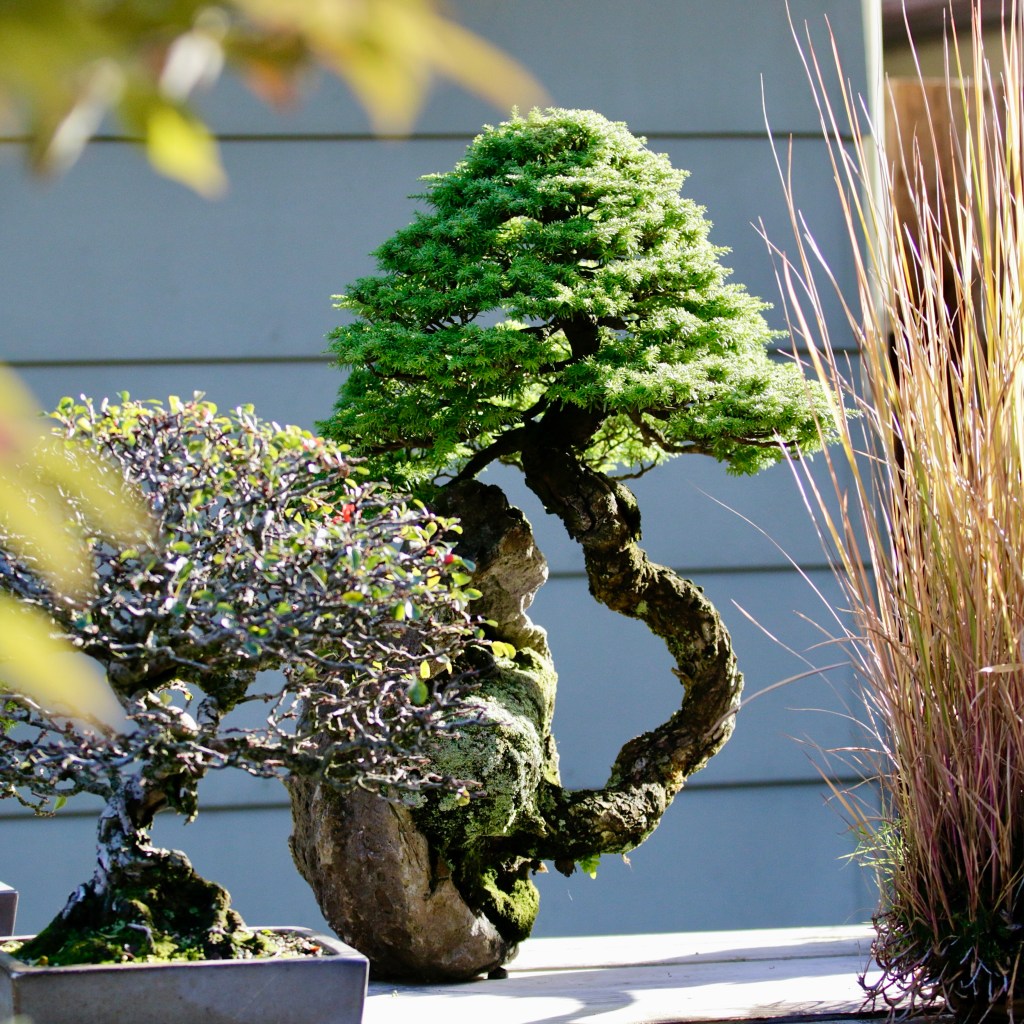
- While apprenticing in Japan you expressed that your favourite tree to work with was a Juniper and how their inherent forms paralleled your work as an abstract painter in college. 20 years now passed, can you briefly touch on some pivotal moments in your evolutionary journey that formed your current passion of exploring upright forms and forest ecology inspired by old growth forests locally to you in the Pacific North West. Coupled with this, do you think this is a journey every artist needs to walk to find their ‘artist statement?’
Right, I was very taken with Junipers for their abstract qualities. They often don’t resemble trees, so with a tree’s foliage we can create something that is tree-ish but not very tree-like. Living in a place where there are no junipers, I naturally fell in love with what we do have. While spruce forms a major part of the Japanese bonsai palette, hemlock is rarely worked with. Here it is hard to ignore. I may have been primed to work with moist forest trees as I grew up on the east coast, with the mixed woods of hemlock, beech and maple. And although the species are different on the west coast, it isn’t arid. The ecology was new to me—the nurse logs and the rapid decomposition of old trunks, this gripped me and felt like a canvas I could work with. Artistic journey…well, some of our creative journeys are internal, and others are external. Mine have tended to be external and heavily influenced by surroundings. But other artists—some of them bonsai artists—work more internally. But in the internal sense, with my ceramics sculpure background, I was taught to journey with the work. That it would lead you if you let it, and to give up on the idea of a destination—which is more the world of craft—and then it might lead you to an unexpected place. The work I’ve done with countertop slabs and 3D printed slabs and such as substitutes for rock supports, that all came from cornering myself into a place where I had to find a solution. I didn’t want to use rock, so the question was, what then? It wasn’t as if I went to bed one night and awoke with a solution, the solution came from working. Also, in collaboration with others. In the process of getting boxed in a corner, students played a role in finding our way out. As a potter I didn’t have a collaborative background, but I have benefited from it in bonsai.
- Commencing in 2013, 13 years in and 5 apprentices thus far. How have these individuals influenced your practice as a teacher and artist and have you experienced any subtle shifts in your approach to any aspect of your work from one apprentice to another?
Very much the collaborative thing. Students and apprentices, some of whom are there every day and they have helped direct the garden—in the teaching, the business side of things (which shall we say, I’m un-modern with). I feel much the same as Mr. Suzuki, who said that he learned to trust his former apprentices, that they would know the right next steps. That does take a lot of pressure off.
- As a very much successful bonsai artist, published author, teacher, avid blogger and the list goes on! Knowing that the pursuit of this art form requires an investment that no one can alter; time. Could you please touch on how you navigated the challenges of establishing the business aspect of your practice when coming back from your apprenticeship in Japan.
I had a background in art and had to learn about business. One of the best classes I could have used, but didn’t take, was a small business class. After two decades I probably have gotten the gist of it, though I’d recommend the class. Time is the one thing no one can give you, but you sure can lose it. It’s like writing a book or investing in the stock market, you can’t give up too soon. Keep at it. Bonsai is like this too. You work on something for five years and it’s just not responding (and at that point maybe it is worth taking stock and asking if it’s not better off planted in the garden), but often with a tree we hit year six or seven and then it gels. Something was there that hadn’t been there before. Some creative efforts are like a marathon. And they’re slow. They are the antithesis of Instagram—the speed is right there in the title—and so we can get dismissive of the Slowagrams, like trees.
- Having watched Mr Shinji Suzuki’s documentary ‘Works of Divinity’, I was deeply moved by his reverence for these trees. You really feel the sense of connection that he has with his trees. Although sadly I have not yet seen them in person yet, but studying his work online at exhibitions or in his garden they seem to garner a much deeper engagement. Would you directly correlate his teachings/ influence to lead you to focus on presentation rather than manipulation and could you please elaborate further on this statement.
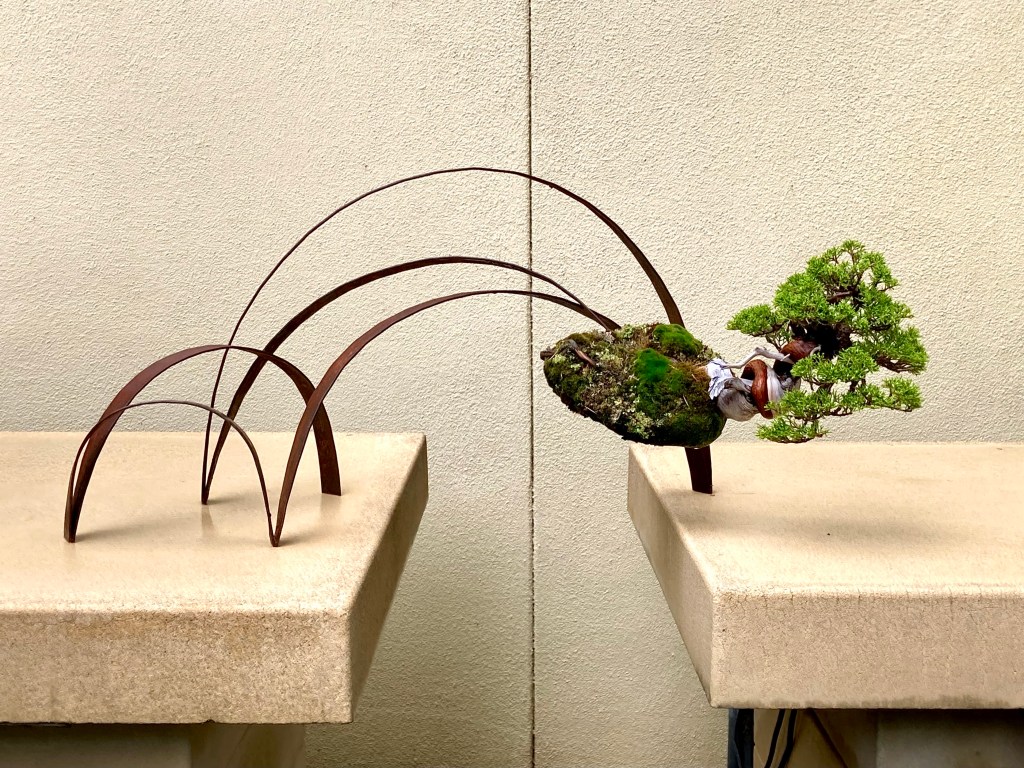
His feeling for trees continues to inspire me. It’s an interesting question—I haven’t felt much the desire to fiddle with the frame or balance in the parts of a bonsai, other than the pot, which I’ve made a study of with the metal and plastic presentations. Or in display. That seems enough fiddling for me. Often, maybe, it’s too much! But I think too many variables muddy the waters, and the traditional frame of a bonsai is either something for me later to fiddle with, or it’s fiddle-worthy for someone else.
- Where I see the formation of chapters making up a bonsai artists career, where things such as: influences; impacts; community; experiences and other factors, that guide and transition an artists career from one chapter into the next. If you had to title a chapter of where you are currently and then also what may be the following chapter in your career, what would they be and could you please elaborate briefly on them.
Chapter: Exhaustion! No, I’m kidding. I am grateful actually for the apprentices and volunteers in the garden, and we get probably 5x more done now than when I started. Everything is run so smoothly and so this might be—temporarily as the way of things are—the Smooth chapter. The next one is still in the oven. I feel in mid-career, and given how many changes I’ve been through I feel there’s another chapter within bonsai yet to emerge. Not sure what that one might be called. There’s an aquatic insect, the Mayfly, that when it emerges from the water is called a sub-imago. It hasn’t hardened off yet, and while we may think of that as the young adult—the 20 year old who is weening off of the worst social media phases and discovers a thing called rent—but I think there’s an imago phase that happens after the Exhaustion / Smooth chapter, in the middle of a career, where you are malleable again, just before you harden into a new form. That’s sort of where I am. There’s bonsai ahead, and more writing—if, that is, I’m not nabbed by a trout.
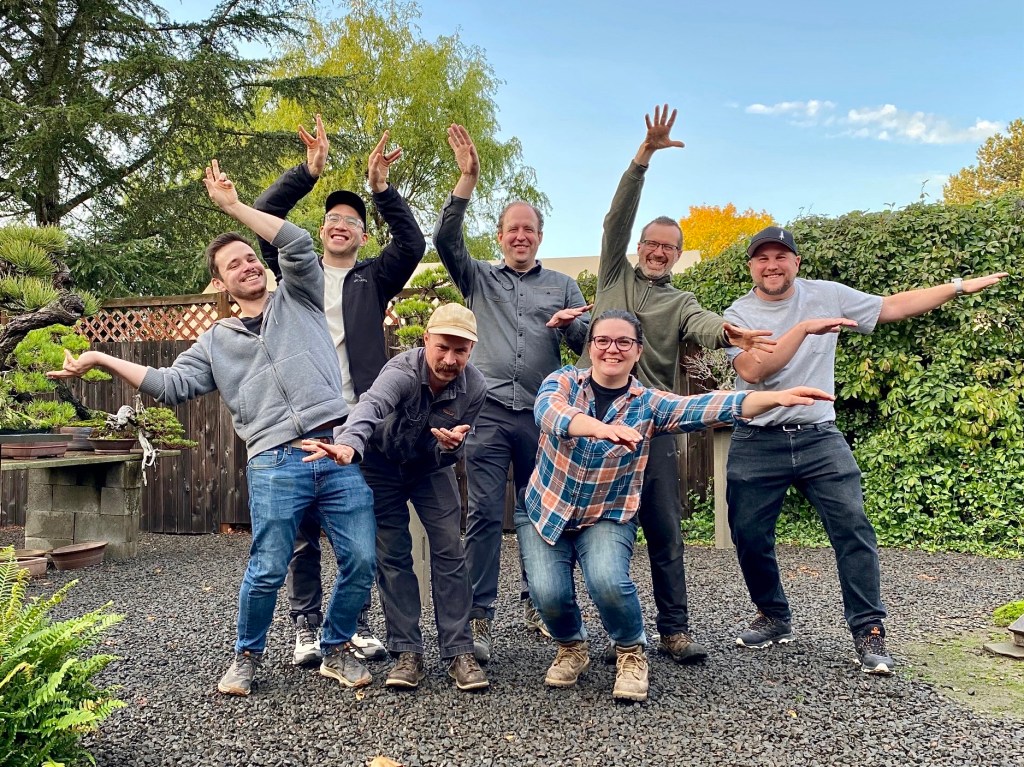
Michael, thank you so much for your time! I thoroughly enjoyed taking albeit only a small glimpse into your world and surroundings. Your blog posts are always a great read and I really do hope we can touch base again soon!
All the best Michael!


Leave a Reply